
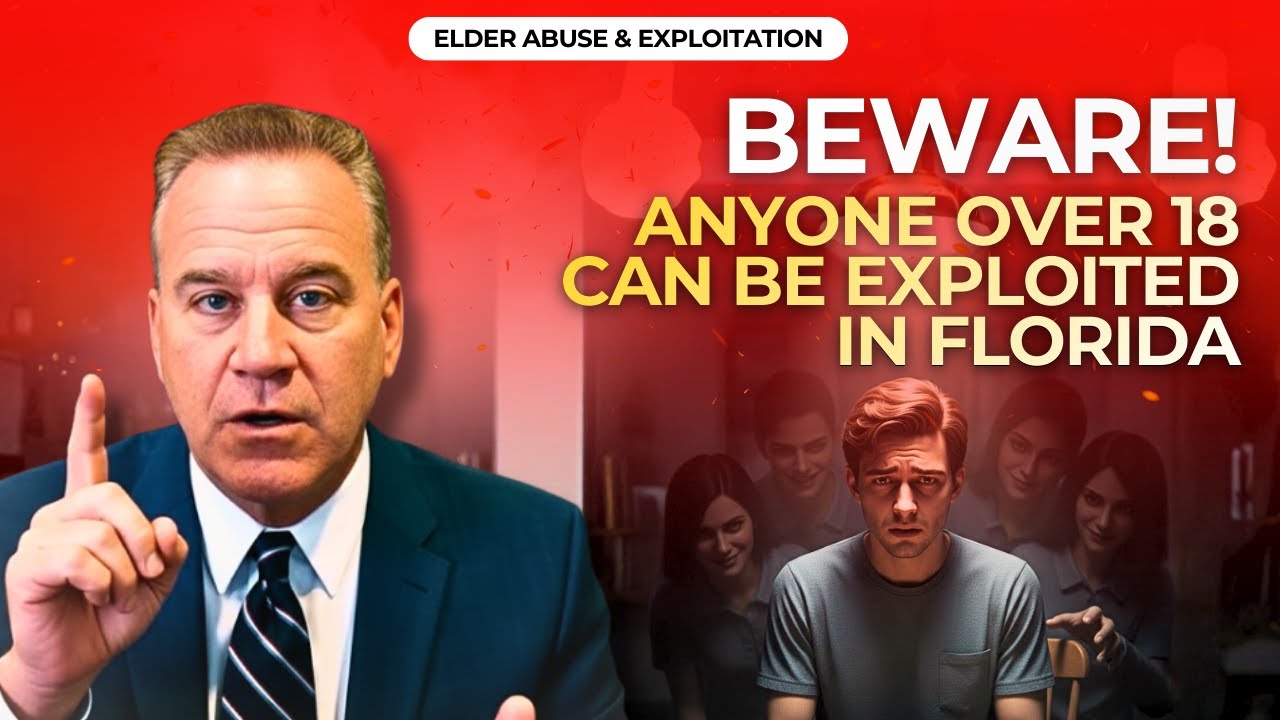

In short: Under § 415.102, a vulnerable adult is anyone 18 or older whose ability to handle daily life or protect themselves is impaired by a mental, emotional, physical, or developmental condition, or the infirmities of aging. Exploiting that person’s money can bring a civil suit with attorney’s fees (§ 415.1111) and felony charges (§ 825.103).
People hear "elder abuse" and picture a frail grandmother in a nursing home. Florida law is much broader than that, and most families don’t know it.
"Vulnerable Adult" Means 18 and Up, Not 65 and Up
Chapter 415 is the civil side of Florida’s adult protection law. Its definition is the one that matters:
"Vulnerable adult" means a person 18 years of age or older whose ability to perform the normal activities of daily living or to provide for his or her own care or protection is impaired due to a mental, emotional, sensory, long-term physical, or developmental disability or dysfunction, or brain damage, or the infirmities of aging. (§ 415.102)
Read it again. Age is one route in. It isn’t the only one. A 30-year-old after a brain injury. A 45-year-old in a mental health crisis. A 22-year-old with a developmental disability. If the impairment is there and someone uses it to take money, the statute applies.
What Counts as Exploitation
Under § 415.102, exploitation includes a person in a position of trust who, by deception or intimidation, takes or uses a vulnerable adult’s money or property for someone else’s benefit. It also includes anyone who knows, or should know, that the person lacks capacity to consent and takes the money anyway.
In practice, that looks like:
- Writing checks to yourself from a parent’s account.
- Adding yourself to accounts, or changing beneficiary and payable-on-death designations.
- Using a power of attorney for anything other than the principal’s benefit.
- Pressuring someone to sign a deed, a will, or a trust amendment.
- Neglect: holding the money and not spending it on the person’s care.
The Criminal Side: Chapter 825
Chapter 825 makes exploitation of an "elderly person" (60 or older with age-related impairment) or a "disabled adult" a crime. Under § 825.103(3), the degree depends on the amount:
- $50,000 or more: first-degree felony.
- $10,000 to under $50,000: second-degree felony.
- Under $10,000: third-degree felony.
Section 825.103 also reaches agents under a power of attorney, guardians, and individual trustees who breach their fiduciary duty and cause an unauthorized transfer of the person’s property.
The Civil Side: Suing to Get It Back
Section 415.1111 gives a vulnerable adult a cause of action against the person who exploited them, for actual and punitive damages. The suit can be brought by the victim, a guardian, someone acting with consent, or the personal representative of the victim’s estate after death. A party who prevails may recover attorney’s fees and costs.
Faster Tools
- Injunction against exploitation. Section 825.1035 creates an injunction for protection against exploitation of a vulnerable adult. A court can enter a temporary injunction ex parte, including freezing assets, for up to 15 days pending a full hearing.
- Advancing the trial. Under § 415.1115, a party over 65 in a civil case may ask the court to advance the trial on the docket. The judge decides based on age and health.
- Reporting. Section 415.1034 requires any person who knows, or has reasonable cause to suspect, that a vulnerable adult is being abused, neglected, or exploited to report it to the central abuse hotline: 1-800-96-ABUSE (1-800-962-2873).
Watch: the videos behind this article
Elder Abuse Not Just About Seniors | Florida Vulnerable Adult Law
Most Powerful Tool Exploiters Use in Florida: Power of Attorney (Chapter 825 Felony)
Is Elder Exploitation a Felony under Florida Law?
Florida’s Elder Abuse Laws Aren’t Just for the Elderly
Elder Abuse Defined: How Broad Florida Law Really Is…
More Short Videos on This Issue



Watch the Real Appellate Arguments
This is a recording of an actual Florida appellate oral argument, posted on the channel, in a case involving a power of attorney used to cash an elderly man’s savings bonds. An argument is not a ruling: read the written opinion before relying on any outcome.
Uttering a Forged Instrument: Is an Improperly Notarized Power of Attorney False?
Go Deeper
- When a Family Member Is Taking a Parent’s Money in Florida: Power of Attorney, Guardianship, and Exploitation
- Is My Sister Stealing Our Mother’s Money? Florida Law on Elder Financial Exploitation
- "Exploitation of a Vulnerable Adult" by Exerting Undue Influence
Frequently Asked Questions
Who is a vulnerable adult under Florida law?
Under § 415.102, anyone 18 or older whose ability to perform normal daily activities or protect themselves is impaired by a mental, emotional, sensory, long-term physical, or developmental disability, brain damage, or the infirmities of aging.
Is elder exploitation a felony in Florida?
Yes. Under § 825.103, exploiting an elderly person or disabled adult is a third-degree felony under $10,000, a second-degree felony from $10,000 to under $50,000, and a first-degree felony at $50,000 or more.
Can you sue someone for exploiting a vulnerable adult in Florida?
Yes. Section 415.1111 allows a civil action for actual and punitive damages, and a prevailing party may recover reasonable attorney’s fees and costs. The personal representative can bring the claim after the victim’s death.
How do I report suspected exploitation in Florida?
Call the Florida Abuse Hotline at 1-800-96-ABUSE (1-800-962-2873). Section 415.1034 requires anyone who knows or has reasonable cause to suspect abuse, neglect, or exploitation of a vulnerable adult to report it.
Talk to a Florida probate litigator
Weidner Law, P.A. handles Florida probate, trust, and will disputes from St. Petersburg. If you need a estate litigation lawyer for an exploitation or power of attorney dispute, call (727) 954-8752 or email weidner@mattweidnerlaw.com.
Read the law yourself: Chapter 415, Florida Statutes (Adult Protective Services) and Chapter 825 (Abuse, Neglect, and Exploitation of Elderly Persons and Disabled Adults). The Florida Probate Code and Trust Code are free on floridarules.net.
This article is general information about Florida law, not legal advice about your situation. Reading it, watching the videos, or contacting the firm does not create an attorney-client relationship. Every case turns on its own facts, and past results do not guarantee a similar outcome. The hiring of a lawyer is an important decision that should not be based solely upon advertisements.
