
In short: Not automatically. If the agreement does not clearly say what can be built and where, a single drawing attached to it may not settle the question, and a court cannot grant summary judgment on it. In Grove Harbour Marina and Caribbean Marketplace, LLC v. Grove Bay Investment Group, LLC, a Coconut Grove developer won summary judgment and an injunction allowing it to realign Charthouse Drive with a roundabout on the neighboring marina’s leasehold. The Third District reversed in part because the easement agreement was ambiguous, in an opinion issued May 31, 2023 and replaced on rehearing on May 15, 2024.
The Facts
Grove Harbour operates a marina and boat launch on South Bayshore Drive in Coconut Grove, on land leased from the City of Miami. Grove Bay leases the neighboring waterfront parcels from the City under a 50-year lease signed in 2013 for a redevelopment called “The Harbour.” Its proposal relied on launching boats from Grove Harbour’s marina.
The parties signed an Access Agreement in 2013. In 2016 they and the City signed an Access Easement and Indemnification Agreement (the AEIA) covering the realignment of Charthouse Drive, a City road between the two leaseholds. The plans attached to the AEIA were a single image that showed a new roundabout on Grove Harbour’s property. A later “Side Agreement” clarified parts of the AEIA.
In 2017 a Grove Harbour subsidiary stopped running the marina operation after a management agreement lapsed. Grove Bay switched to on-site boat launches but still wanted to build the road changes. It sued for declaratory relief, an injunction and specific performance. Grove Harbour defended on repudiation, failure of consideration and fraud in the inducement. The trial court found the agreements unambiguous and granted summary judgment and an injunction for Grove Bay. The case was argued on December 6, 2022. The points below are what the lawyers argued.
- Grove Harbour argued the AEIA defined “Chart House Drive” by a metes-and-bounds description of the existing road, outside both leaseholds, and that the attached site rendering could not override that definition. It said the grant of access in the AEIA came from the City, not from Grove Harbour.
- It also argued its fraud defense raised fact questions, and that the injunction was too vague because its diagrams did not match.
- Grove Bay argued the AEIA was an easement over the road as improved under the attached plans, that the same rendering was approved by the City with full construction drawings, and that no metes-and-bounds description is needed to create an easement. It argued the fraud defense was pled only as an omission with no duty to disclose.
The Decision
The Third District affirmed in part, reversed in part and remanded. Its first opinion issued May 31, 2023. On rehearing, the court denied both sides’ motions but withdrew that opinion and substituted a new one on May 15, 2024. Further rehearing was denied July 9, 2024, and the mandate issued July 30, 2024.
On the contract, the court held the AEIA was ambiguous about the scope and location of the improvements: it “failed to provide the requisite clarity as to the exact nature of the improvements.” The approved plans were one image with no written description, and Grove Harbour had approved only the original plans, so it was unclear whether the switch to alternative plans tied to on-site launching was a permitted modification. Extrinsic evidence was needed, so summary judgment was reversed.
Grove Harbour did not win everything. In a footnote the court rejected its argument that any improvements had to stay within the existing road described by metes and bounds. The court also affirmed summary judgment against Grove Harbour on repudiation and failure of consideration, holding the Access Agreement “has not been breached or repudiated solely by Grove Bay’s switching to on-site boat launches.” It reversed on fraud in the inducement because fact disputes remained about the representations and reliance. The opinion did not separately address the injunction’s wording.
The Law
When a contract is clear, the court enforces its words, and the case can often be decided on summary judgment. When the words support more than one reasonable reading, the contract is ambiguous, and evidence of what the parties intended becomes a fact question. An attached drawing can be part of the contract, but if it does not answer the question in dispute, it can create ambiguity rather than resolve it.
The summary judgment here was governed by rule 1.510. Because the judgment was rendered before May 1, 2021, the court applied Florida’s older standard, under which summary judgment was improper if the record showed even the slightest doubt of a genuine factual issue. Current law (2026): the rule was amended effective May 1, 2021, to follow the federal summary judgment standard. Ambiguity that requires extrinsic evidence still generally prevents summary judgment.
Florida courts also say fraud is ordinarily inappropriate for summary disposition, because intent and reliance are fact questions. The court relied on that principle in reversing on the fraud defense.
Injunctions must meet rule 1.610(c), which requires the order to describe in reasonable detail the acts restrained without reference to a pleading or another document. Grove Harbour raised that point, but the opinion resolved the appeal on the summary judgment issues.
Lessons
- If an easement or access agreement is meant to allow construction, say in words what will be built, where, and on whose land. Do not rely on a rendering.
- A metes-and-bounds definition of a road may not, by itself, limit where improvements can go. The court rejected that argument here.
- Changing your business plan, as Grove Bay did with boat launches, is not automatically a breach or repudiation of a related agreement.
- Fraud in the inducement defenses that turn on what was said and relied on are hard to resolve on summary judgment.
Source: Grove Harbour Marina and Caribbean Marketplace, LLC v. Grove Bay Investment Group, LLC, No. 3D21-0806 (Fla. 3d DCA May 15, 2024) (on rehearing, substituting opinion of May 31, 2023); ACIS docket.
Watch the Oral Argument
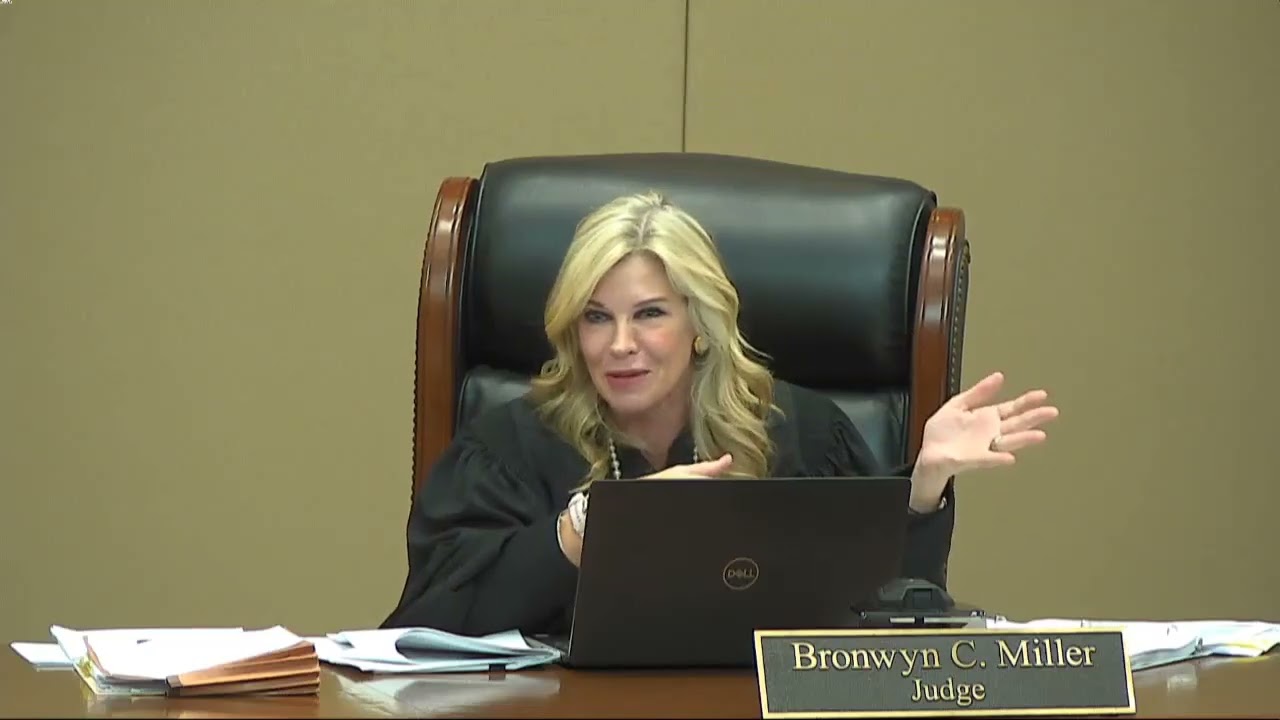
This is the recording of the actual oral argument, posted on the channel. What lawyers and judges say at argument is not the ruling; the decision is summarized above.
Does an Easement Agreement Let a Neighbor Build a Traffic Circle on the Marina's Leasehold?
Read the Law on FloridaRules.net
The statutes and court rules discussed in this article, free to read on FloridaRules.net:
Go Deeper
- Easement Disputes in Florida: Utility, Access, and Prescriptive Easements
- A Developer’s Parking Easement Over Its Own Land Fails on Appeal (AFP 103 Corp. v. Common Wealth Trust)
- Florida’s Summary Judgment Rule: How Rule 1.510 Ends Cases Without a Trial
Frequently Asked Questions
Is a drawing attached to a contract part of the agreement?
It can be, if the contract incorporates it. But in Grove Harbour, a single attached image without a written description did not clearly show what improvements were allowed, so the Third District found the agreement ambiguous.
Can a neighbor build on my property under an easement agreement?
Only within the scope the easement grants. When the agreement is unclear about what can be built and where, the scope becomes a fact question for trial, which is why the summary judgment in Grove Harbour was reversed.
What happens when a contract is ambiguous in Florida?
The court may consider outside evidence of what the parties intended, and that usually means the issue cannot be decided on summary judgment. The Grove Harbour case was sent back for that reason.
Can fraud in the inducement be decided on summary judgment?
Rarely. Florida courts say fraud is ordinarily inappropriate for summary disposition because it turns on intent and reliance. The Third District reversed the summary judgment on Grove Harbour’s fraud defense.
Talk to a Florida real estate litigation lawyer
Weidner Law, P.A. handles Florida real estate disputes, title problems and appeals from St. Petersburg. If you need a real estate litigation lawyer, call (727) 954-8752 or email weidner@mattweidnerlaw.com.
Read the law yourself, free: every Florida statute and court rule is on floridarules.net.
This article is general information about Florida law, not legal advice about your situation. Reading it, watching the videos, or contacting the firm does not create an attorney-client relationship. Every case turns on its own facts, and past results do not guarantee a similar outcome. The hiring of a lawyer is an important decision that should not be based solely upon advertisements.
