
In short: It can be. A regulation that leaves property with no lawful use can be a compensable taking under the Penn Central test, even when the owner had time to comply. In Department of Agriculture and Consumer Services v. Mahon, a Lake County trial court found that the state took about 7,700 citrus trees from a family nursery that had not moved its stock into a protective structure by the January 1, 2008 deadline, and a jury set compensation. The Fifth District affirmed without a written opinion on August 8, 2023.
The Facts
John L. Mahon and Shelby Mahon ran a citrus nursery in Lake County, John’s Citrus Trees. To fight citrus canker and citrus greening, the Legislature in 2006 required citrus nursery stock to be grown inside protective structures approved by the Florida Department of Agriculture and Consumer Services. After January 1, 2008, it was unlawful to distribute nursery stock that had not been produced in such a structure.
The Mahons did not get all of their stock enclosed by the deadline. The Department issued written stop-sale-and-hold orders, and the Mahons destroyed trees covered by those orders. An inspector later told them, verbally, that they had to do something with their remaining trees; they could not sell them, enclose them or plant them. The Mahons destroyed those trees too and sued for a taking.
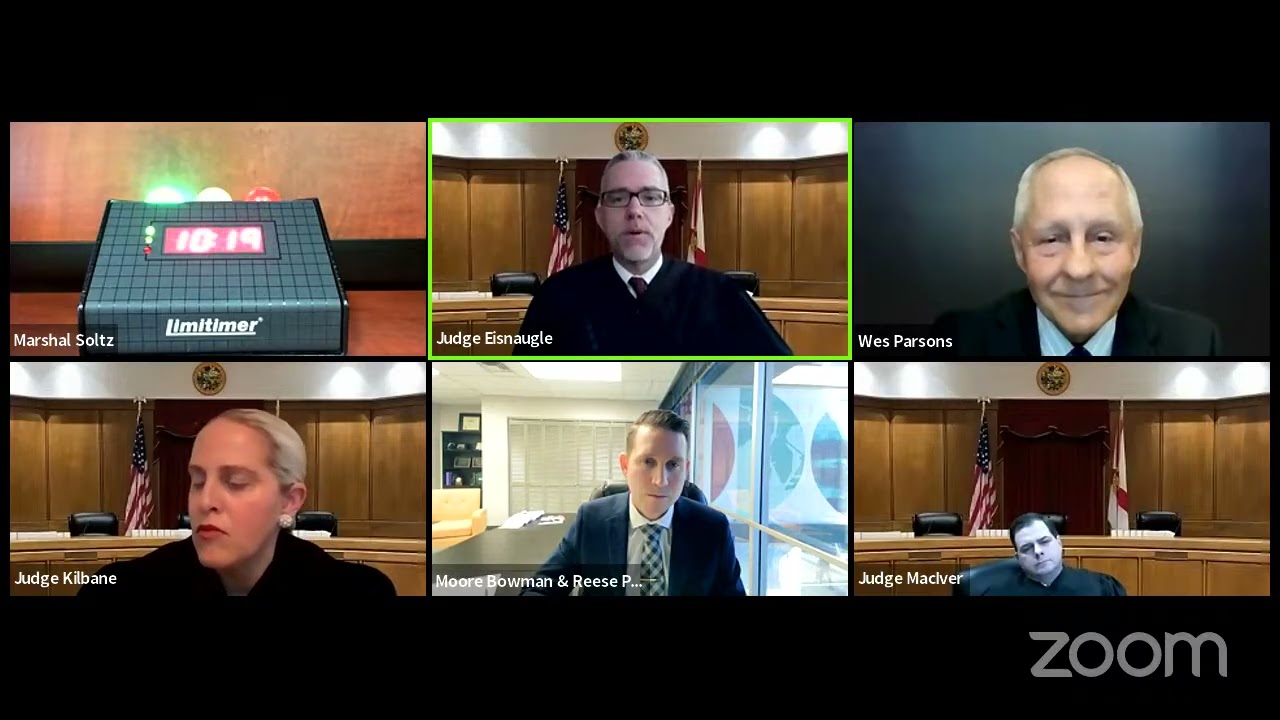
The trial court (the lower case dates to 2011) applied the three-factor test from Penn Central Transportation Co. v. City of New York, 438 U.S. 104 (1978). It ruled for the Department on the trees covered by the written orders but found a taking of about 7,700 trees covered by the verbal order, and a jury determined their value. The Department appealed. The Fifth District heard argument by Zoom in early 2023. The points below are what the lawyers argued, not findings by the appellate court.
- The Department argued the economic impact was zero because the Mahons had about 18 months to enclose or sell their trees, as nearly every other nursery did; that citrus is a heavily regulated industry, so a new rule was no surprise to their investment-backed expectations; and that protecting the citrus industry is a strong public interest. It argued the trial court misapplied all three Penn Central factors and that review of that application is de novo.
- It also argued the trial court drew an illogical line between the written orders and the verbal one, and cited cases holding that a phase-in period can defeat a takings claim.
- The Mahons argued an owner’s failure to comply is not part of the Penn Central analysis, that a grace period is just a demand that the owner spend money to avoid the loss, and that economic impact is measured by the property’s value before and after the regulation was applied. They said they were told early on that the stock was worthless, and that the Department did not challenge the trial court’s historical fact findings.
The Decision
The Fifth District affirmed in a per curiam affirmance (PCA) on August 8, 2023, with no written opinion. The mandate issued August 29, 2023. An earlier order allowing consolidation with another appeal was withdrawn and consolidation was denied.
A PCA decides only this case. It leaves the Mahons’ judgment in place, but it does not announce a rule that every phase-in regulation is a taking or that an owner’s failure to comply never matters. At argument, the panel pressed both sides on whether the 18-month compliance window and the cost of building a screen house belong in the economic-impact factor or the expectations factor.
The Law
The Fifth Amendment and Article X, section 6 of the Florida Constitution require full compensation when private property is taken for public use. When a regulation goes too far without a physical seizure, courts usually weigh the Penn Central factors: the economic impact on the owner, the interference with distinct investment-backed expectations, and the character of the government action.
The nursery rule at issue is section 581.1843. It made it unlawful, effective January 1, 2007, to propagate citrus nursery stock for sale outside an approved protective structure, and, effective January 1, 2008, to distribute citrus nursery stock not produced in one. The Department adopts the specifications for those structures by rule.
Florida also has a separate statutory remedy, the Bert J. Harris, Jr., Private Property Rights Protection Act, section 70.001, for government action that inordinately burdens real property. The Mahons’ case was argued as a constitutional takings claim under Penn Central.
Lessons
- A compliance deadline is not a safe harbor for the government. In this case, a nursery that missed the deadline still recovered a takings judgment that survived appeal.
- Owners in regulated industries should not count on that result. The state argued, with some support in other jurisdictions, that a phase-in period defeats a taking, and the PCA does not reject that argument.
- Document everything the agency tells you. Here the only evidence about the verbal order came from the owners, because the inspector did not testify.
- Takings cases are long. This one began in circuit court in 2011 and ended on appeal in 2023.
Watch the Oral Argument
This is the recording of the Fifth District oral argument, posted on the channel. What lawyers and judges say at argument is not the ruling, and this decision was a per curiam affirmance without an opinion.
📑 State Ordered Farmers to Burn Their Citrus Trees — Was That a Government Taking? | 21-3189
Go Deeper
- Florida Real Estate- Bert Harris Claims, Flood Insurance And Construction Permits
- Code Enforcement Appeals Get Full Appellate Review (MGM of West Florida v. Manatee County)
- Daytona Beach Vacation Rental Owners Lose on Appeal (Synk v. City of Daytona Beach)
Frequently Asked Questions
Can the government make me destroy my property without paying for it?
Sometimes. Valid health and safety regulation is not automatically a taking, but a regulation that goes too far can require compensation under the Penn Central test. In Mahon, a trial court found that forcing the destruction of about 7,700 nursery trees was a taking, and the Fifth District affirmed without an opinion.
What is the Penn Central test for a regulatory taking?
Courts weigh the economic impact of the regulation on the owner, how much it interferes with the owner’s reasonable investment-backed expectations, and the character of the government action. No single factor controls, and the analysis is case by case.
If I had time to comply with a new law and didn't, can I still claim a taking?
There is no settled Florida rule. In Mahon, the owners missed the January 1, 2008 enclosure deadline in section 581.1843 and still kept their takings judgment, but the affirmance had no opinion, and the state cited cases from other courts holding that a phase-in period defeats a taking.
Why did Florida require citrus nurseries to use screen houses?
To stop the spread of citrus canker and citrus greening through nursery stock. Under section 581.1843, citrus nursery stock had to be propagated in approved protective structures starting in 2007, and stock not produced in one could not be distributed after January 1, 2008.
Talk to a Florida real estate litigation lawyer
Weidner Law, P.A. handles Florida real estate disputes, title problems and appeals from St. Petersburg. If you need a real estate litigation lawyer, call (727) 954-8752 or email weidner@mattweidnerlaw.com.
Read the law yourself, free: every Florida statute and court rule is on floridarules.net.
This article is general information about Florida law, not legal advice about your situation. Reading it, watching the videos, or contacting the firm does not create an attorney-client relationship. Every case turns on its own facts, and past results do not guarantee a similar outcome. The hiring of a lawyer is an important decision that should not be based solely upon advertisements.
