
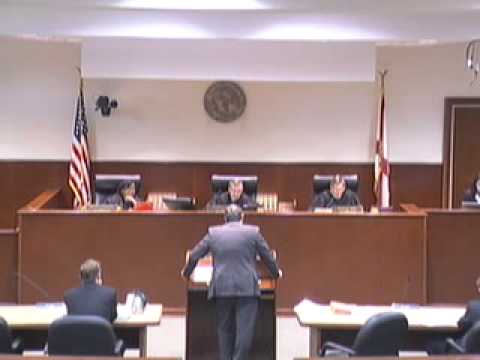
In short: A development buyer used sewer capacity credits that an earlier developer had paid for, then argued an anti-assignment clause meant it owed nothing under a post-closing cooperation agreement. The trial court ruled for Mask Partners, and in December 2014 the Second DCA affirmed without a written opinion.
The Facts
The Second District affirmed without an opinion, so these facts come from the arguments as described in the oral argument video, not from appellate findings.
An earlier developer paid a utility about $1.2 million for sewer capacity to serve roughly 1,900 planned homes. Under a post-closing cooperation agreement, the developer’s side (Mask Partners) was to recoup that cost at about $3,380 per building permit as the land was built out. Taylor Woodrow later sold the development to Windham/Magnolia Landing, LLC in December 2008, and Windham used the sewer credits.
Mask Partners sued Windham and Taylor Woodrow, and the trial court ruled for Mask. On appeal Windham argued that the agreement’s anti-assignment clause made any assignment void, so the obligation never passed to it and it could not be liable.
The Decision
On December 17, 2014, the Second District affirmed in a per curiam decision without an opinion. The judgment for Mask Partners stood. Because there is no opinion, the court did not say whether it rejected the anti-assignment argument on the contract’s wording, on the buyer’s acceptance of the credits, or on some other ground.
The Law
Florida courts generally enforce anti-assignment clauses as written, but the effect depends on the wording. A clause that only says a party “shall not assign” may be read as a promise whose breach gives a damages claim, while a clause that says an assignment is “void” more clearly removes the power to assign. Courts also consider whether the person trying to avoid the contract accepted its benefits; a party who takes the benefit of a contract right may be held to the burdens that come with it.
Development agreements that let a developer recover infrastructure costs, such as sewer or water capacity, are common in Florida. Their recovery terms often survive a sale of the land if the agreement or recorded documents say so.
Lessons
- When buying a development, find every post-closing, cost-sharing and reimbursement agreement tied to the land, recorded or not.
- An anti-assignment clause is not an automatic shield. If you use the benefit, expect a court to ask why you should not bear the cost.
- Draft anti-assignment clauses precisely, stating whether an assignment is void or merely a breach.
- Get estoppel letters from anyone who may claim reimbursement for utility capacity or impact fees before closing.
Source: Windham/Magnolia Landing, LLC v. Mask Partners, LLC, No. 2D14-0390 — Fla. 2d DCA (December 17, 2014).
Watch the Oral Argument
This is the recording of the actual oral argument, posted on the channel. What lawyers and judges say at argument is not the ruling; the decision is summarized above.
Developer Disputes Post-Closing Contract Assignment | Windham/Magnolia Landing v. Mask Partners, 2D14-390
Go Deeper
- A Contract Remedy That Wasn't Exclusive: Specific Performance Survives (Regents Park v. KAI)
- Land Trust, Rezoning, and an "Officious Intermeddler": No Unjust Enrichment (City National Bank v. Signature Land)
Frequently Asked Questions
Is an anti-assignment clause enforceable in Florida?
Generally yes. Florida courts enforce clear anti-assignment provisions. The result depends on the language: some clauses only create a damages claim if breached, while others make the assignment void. Courts may also hold a party to a contract’s obligations if it knowingly accepted the benefits.
Does a buyer of land have to pay a prior developer's reimbursement agreement?
It depends on the agreement and the facts. If the obligation runs with the land, was assumed in the purchase, or the buyer accepted the benefit such as sewer capacity credits, a court may hold the buyer responsible. A buyer’s lack of a direct contract is not always a defense.
What are sewer capacity credits in Florida development?
They represent capacity a developer pre-purchased from a utility, often through connection or impact fees, to serve future homes. The credits are used as building permits are issued. Agreements often let the party who paid recover the cost per permit from whoever later builds.
What does a PCA from the Second DCA mean?
A per curiam affirmance means the court upheld the trial court without a written opinion. The judgment stands, but the decision has no precedential value, and the Florida Supreme Court generally cannot review it because there is no opinion stating a rule of law.
Talk to a Florida real estate litigation lawyer
Weidner Law, P.A. handles Florida real estate disputes, contracts, closings and appeals from St. Petersburg. If you need a real estate litigation lawyer, call (727) 954-8752 or email weidner@mattweidnerlaw.com.
Read the law yourself, free: every Florida statute and court rule is on floridarules.net.
This article is general information about Florida law, not legal advice about your situation. Reading it, watching the videos, or contacting the firm does not create an attorney-client relationship. Every case turns on its own facts, and past results do not guarantee a similar outcome. The hiring of a lawyer is an important decision that should not be based solely upon advertisements.
