
In short: Florida’s appellate courts did not answer that question in this case. In Coastal Construction of Miami-Dade County v. Gillette Construction Service Corp., a Miami-Dade trial court ruled that the subcontractor’s surety, which paid the subcontractor’s bills, had priority to about $300,000 left in the subcontract balance over the general contractor’s claimed right to set off losses on a different project. The Third District heard argument in March 2018, questioned its own jurisdiction, and the contractor voluntarily dismissed the appeal in July 2018, so there was no appellate ruling on the merits.
The Facts
Coastal Construction of Miami-Dade County, Inc. was the general contractor. Gillette Construction Service Corp. was its subcontractor, and International Fidelity Insurance Company issued payment and performance bonds for Gillette’s subcontract on one project. According to the argument, Gillette also worked for Coastal on a second, unbonded project, where Coastal claimed millions of dollars in losses.
After Gillette defaulted on the bonded job, the surety paid Gillette’s subcontractors and suppliers, about $600,000 by its counsel’s account. Coastal finished the work, and about $300,000 of the subcontract price was left over. Coastal sued for a declaration that it could keep that money, relying on a setoff clause in the subcontract (Article 29) that the bonds incorporated by reference. The surety counterclaimed for equitable subrogation, unjust enrichment and breach of contract as Gillette’s assignee.
The trial court granted summary judgment for the surety on the declaratory count and the equitable subrogation counterclaim, reserving the other counterclaims, and Coastal appealed (No. 3D17-539). The points below are what the lawyers argued at the March 2018 argument, not findings by any court.
- The panel first asked whether it had jurisdiction, because the surety’s unjust enrichment and breach of contract counterclaims, which seemed to be alternative claims to the same money, were still pending. It offered to relinquish jurisdiction so the parties could dismiss them and perfect the appeal, or to dismiss the appeal.
- Coastal argued that the surety, a compensated surety, agreed to bonds that incorporated the whole subcontract, including the setoff clause, and that equity cannot override an express contract.
- The surety argued that a surety who pays the bills steps into the shoes of the obligee and the unpaid subcontractors, not the defaulting subcontractor, so it is not bound by Gillette’s setoff agreement; that Coastal never made a demand on the performance bond; and that the payment bond contains no setoff right of its own.
- The panel pressed the surety on why it should not take subject to contract terms it agreed to when it issued the bonds.
The Decision
There was no decision on the merits. On July 27, 2018, Coastal filed a notice of dismissal of the appeal, and on July 31, 2018 the Third District recognized it and dismissed the appeal.
The docket does not tell us why the appeal was dismissed or what happened later in the trial court. The trial court’s summary judgment for the surety was never reviewed on its merits, so this case sets no appellate precedent on either the setoff or the subrogation question.
The Law
Equitable subrogation lets a surety that pays its principal’s debts step into the rights of the parties it paid. The U.S. Supreme Court recognized a payment-bond surety’s subrogation rights to retained contract funds in Pearlman v. Reliance Insurance Co., 371 U.S. 132 (1962). How far those rights yield to the express terms of the bond and the bonded contract is the question this appeal raised.
Appellate jurisdiction over a judgment that resolves only part of a case is governed by Florida Rule of Appellate Procedure 9.110(k). A partial final judgment is appealable only if it disposes of a separate and distinct cause of action that is not interdependent with claims still pending. When related claims remain, the appellate court may dismiss the appeal or relinquish jurisdiction so the trial court can finish the case.
Lessons
- General contractors: if you want a setoff right that reaches the surety, put it in the bond in plain words, and follow the bond’s demand and notice steps.
- Sureties: read what the bond incorporates. Incorporating the subcontract by reference may bring its setoff and other terms with it.
- Before appealing a partial summary judgment, resolve or dismiss any related claims still pending. Otherwise the appellate court may not have jurisdiction.
- An appeal that is dismissed decides nothing. The trial court’s ruling stands for that case only.
Watch the Oral Argument
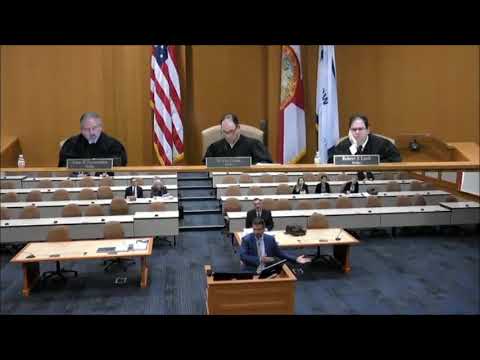
This is the recording of the Third District oral argument, posted on the channel. What lawyers and judges say at argument is not a ruling, and this appeal was voluntarily dismissed without a decision.
Surety's Equitable Subrogation vs. Contractor's Cross-Project Setoff, and Partial Final Judgment
Go Deeper
- Developer's Insiders Bought the Mortgage to Wipe Out the Contractor's Lien (CDC Builders)
- Can a Contractor's Lien Reach a Tenant's Liquor License? (Solid Builders v. Inka Foods)
- Can I Stop Paying Condo Fees If the Association Won't Fix Leaks? (Vital v. Summertree)
Frequently Asked Questions
What is a surety's right of equitable subrogation?
When a surety pays its principal’s subcontractors and suppliers under a payment bond, it can step into the rights of those it paid and claim contract funds the owner or contractor still holds. In Coastal v. Gillette, the trial court gave the surety priority to about $300,000 in remaining subcontract funds on that basis.
Can a general contractor set off a subcontractor's debts from another project?
Between the contractor and the subcontractor, a setoff clause in the subcontract may allow it. Whether that clause binds the subcontractor’s surety depends on the bond and contract terms; the Third District heard that argument in Coastal v. Gillette but never decided it, because the appeal was dismissed.
Does a surety have to follow the terms of the subcontract it bonded?
Bonds often incorporate the subcontract by reference, and the contractor in Coastal argued that made every term, including setoff, binding on the surety. The surety argued it stands in the shoes of the obligee and the unpaid subcontractors, not the defaulting principal. No appellate court resolved the dispute in this case.
Can I appeal a partial summary judgment in Florida?
Only in limited cases. Under rule 9.110(k), a partial final judgment is appealable if it disposes of a separate cause of action that is not interdependent with claims still pending. In Coastal, the panel questioned jurisdiction because related counterclaims were still pending.
Talk to a Florida real estate litigation lawyer
Weidner Law, P.A. handles Florida real estate disputes, title problems and appeals from St. Petersburg. If you need a real estate litigation lawyer, call (727) 954-8752 or email weidner@mattweidnerlaw.com.
Read the law yourself, free: every Florida statute and court rule is on floridarules.net.
This article is general information about Florida law, not legal advice about your situation. Reading it, watching the videos, or contacting the firm does not create an attorney-client relationship. Every case turns on its own facts, and past results do not guarantee a similar outcome. The hiring of a lawyer is an important decision that should not be based solely upon advertisements.
