
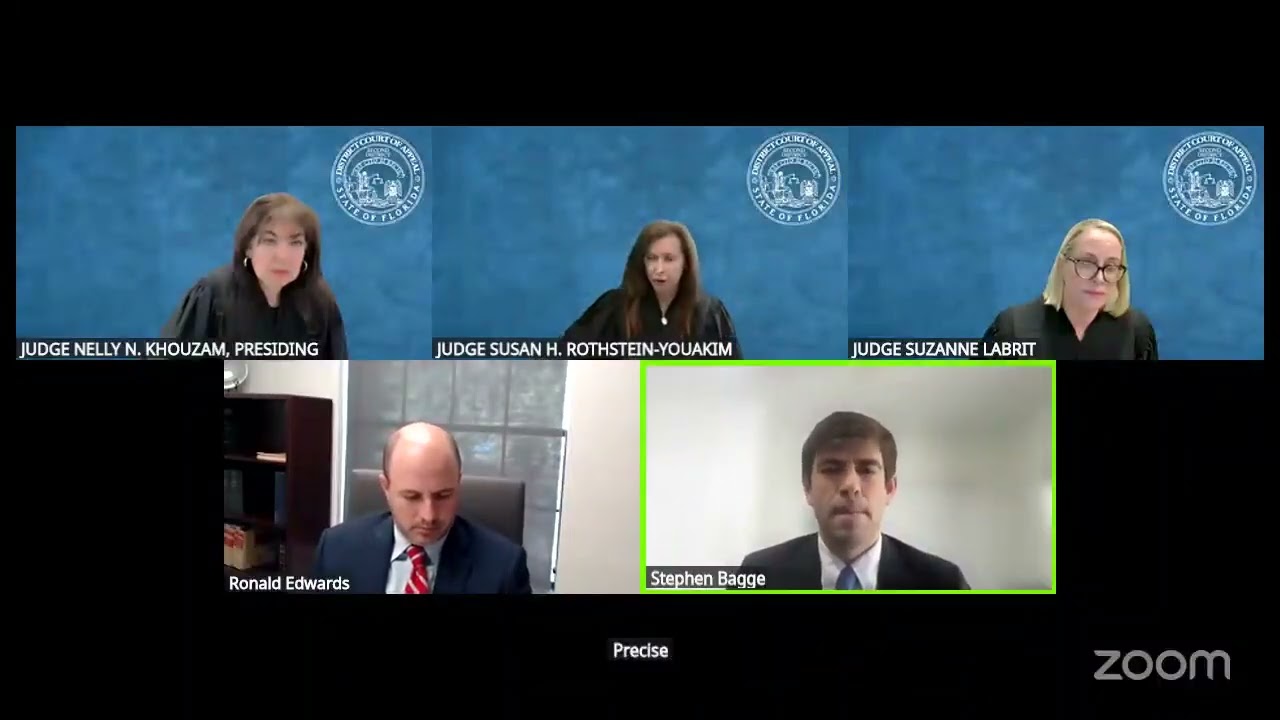
In short: Not in this case. Under Florida’s commercial eviction statute, a tenant who stops paying rent into the court registry as ordered waives its defenses, and the landlord gets an immediate default for possession. In Jaffan International, LLC v. Radhe Krishna Properties, LLC, the tenant argued a bankruptcy court ruling that it still had a lease was binding under res judicata, but the Second District affirmed the eviction without an opinion on February 12, 2025, and the U.S. Supreme Court later denied review.
The Facts
Radhe Krishna Properties, LLC sued its commercial tenant, Jaffan International, LLC, for possession in Hillsborough County, claiming the lease had expired because the tenant did not properly renew it. The county court ordered the tenant to pay rent into the court registry. According to the argument, the tenant started paying and then stopped, and the landlord moved for a final judgment of eviction.
Before a judgment was entered, the tenant filed for bankruptcy. The landlord asked the bankruptcy court for relief from the automatic stay; the bankruptcy court denied it, and the landlord appealed to the federal district court. While that appeal was pending, the bankruptcy case was dismissed, and the district court dismissed the appeal as moot.
Back in state court, the tenant again did not pay into the registry. A new county judge held a second hearing and entered a final judgment of eviction. The tenant appealed, and the Second District heard argument by video on January 28, 2025. The points below are what the lawyers argued, not findings by the court.
- The tenant argued the bankruptcy court’s stay order decided that it had a continuing leasehold, that this was a final federal order never vacated when the bankruptcy was dismissed, and that full faith and credit and federal supremacy required the state court to honor it, whatever the Florida registry statute says.
- It also argued the registry order was void because it was entered before the tenant filed its first paper, while the statute says the order issues upon that filing, and that the final hearing denied due process.
- The landlord argued the case turned on section 83.232: the tenant knew of the order, paid under it and then stopped, which waived all defenses, including res judicata. It also argued the stay ruling had no preclusive effect because the landlord’s appeal was dismissed through no fault of its own, and that the statute requires only a court order, not one entered at a particular time.
- The panel focused on the registry default. One judge asked how a stay order could outlive the dismissal of the bankruptcy case and keep binding the state court.
The Decision
The Second District affirmed on February 12, 2025. The docket lists the disposition as “Affirmed,” and we found no written opinion. The court denied the tenant’s motion for rehearing and for a written opinion on March 25, 2025, and the mandate issued April 11, 2025.
The tenant then petitioned the U.S. Supreme Court for a writ of certiorari (No. 24-1308). The Supreme Court denied the petition in October 2025.
Because there is no opinion, the affirmance does not say which ground the court relied on. It leaves the eviction judgment in place.
The Law
Section 83.232 governs rent in nonresidential (commercial) eviction cases. The tenant must pay into the court registry the rent alleged as unpaid and the rent that comes due while the case is pending. Under subsection (3), the court notifies the tenant of that duty by an order issued upon the tenant’s first filing. Under subsection (5), failure to pay the rent into the registry pursuant to court order is an absolute waiver of the tenant’s defenses, and the landlord is entitled to an immediate default for possession without further notice or hearing.
Residential evictions have a similar rule in section 83.60, which is why the landlord here pointed out that the tenant’s residential-statute arguments did not apply to a commercial lease.
In bankruptcy, the automatic stay under 11 U.S.C. section 362 stops a state eviction case while the bankruptcy is pending. When the bankruptcy case is dismissed, the stay ends. The tenant argued that a ruling the bankruptcy court made along the way still had preclusive effect under 11 U.S.C. section 349; the landlord argued that an order it could not get reviewed on appeal has no res judicata effect.
Lessons
- Commercial tenants: keep paying rent into the registry, on time, no matter what else is going on. Under section 83.232(5), missing a payment can forfeit every defense you have.
- A bankruptcy filing pauses an eviction; it does not end it. If the bankruptcy is dismissed, the state case picks up where it left off.
- If you believe a registry order is defective, raise it promptly with the trial court. Stopping payment is not a safe way to test it.
- Landlords: when a tenant stops paying into the registry, move for a default for possession under the statute rather than litigating the merits.
Watch the Oral Argument
This is the recording of the Second District oral argument on January 28, 2025, posted on the channel in two uploads. What lawyers and judges say at argument is not the ruling, and the court affirmed without a written opinion.
👨⚖️ Commercial Eviction — Bankruptcy Stay Blocks State Court? | 24-0016 | FL DCA
👨⚖️ Commercial Eviction Res Judicata Bankruptcy Full Faith Credit | Case No. 24-0016 | FL DCA
Go Deeper
- Commercial Tenant Skipped Registry Rent, Lost Notice Defense (Goldstein v. 270/286 NE 39th St)
- Can a Court Order Rent Into the Registry Before the Lease Even Starts? (RSG v. Lenet)
- Can You Fight Foreclosure After a Bankruptcy Surrender? (Jabrane v. Bank of America)
Frequently Asked Questions
What happens if a commercial tenant doesn't pay rent into the court registry in Florida?
Under section 83.232, failing to pay rent into the registry as ordered is an absolute waiver of the tenant’s defenses, and the landlord is entitled to an immediate default for possession without a further hearing. In Jaffan v. Radhe Krishna, the eviction was affirmed after the tenant stopped paying.
Does filing bankruptcy stop a commercial eviction?
Yes, while the bankruptcy is pending, the automatic stay generally halts the eviction case unless the landlord gets relief from the stay. If the bankruptcy is dismissed, the stay ends and the state court case can go forward.
Is a bankruptcy court's ruling binding in a later state court eviction?
It depends on whether the ruling was final and whether the losing party had a fair chance to appeal. In Jaffan, the tenant argued a stay ruling was binding, the landlord said its appeal was cut off by the dismissal, and the Second District affirmed the eviction without explaining which argument it accepted.
Can a court order rent into the registry before the tenant files an answer?
Section 83.232(3) says the order issues upon the tenant’s first filing. In Jaffan, the tenant argued an earlier order was void, and the landlord argued subsection (5) applies to any court order the tenant received. The affirmance has no opinion, so it does not settle the point.
Talk to a Florida real estate litigation lawyer
Weidner Law, P.A. handles Florida real estate disputes, title problems and appeals from St. Petersburg. If you need a real estate litigation lawyer, call (727) 954-8752 or email weidner@mattweidnerlaw.com.
Read the law yourself, free: every Florida statute and court rule is on floridarules.net.
This article is general information about Florida law, not legal advice about your situation. Reading it, watching the videos, or contacting the firm does not create an attorney-client relationship. Every case turns on its own facts, and past results do not guarantee a similar outcome. The hiring of a lawyer is an important decision that should not be based solely upon advertisements.
