
In short: Only if the zoning is not designed to restrict firearm sales. Florida’s firearms preemption statute lets cities zone gun businesses along with other businesses, but not for the purpose of restricting gun sales. In Florida Custom Guns v. City of Dania Beach, the Fourth District held on August 20, 2025, in a 2-1 decision, that whether Dania Beach’s ordinances had that purpose was a disputed fact, and it reversed the summary judgment the city had won.
The Facts
Florida Custom Guns, LLC, doing business as Affluent Arms, sells firearms, ammunition and accessories from a storefront in Dania Beach. Its property is in the City Center zoning district, where general retail stores are allowed. The city’s zoning code, however, bars gun stores there and allows them only in the C-3 and C-4 districts, and even there only by special exception.
The city’s code enforcement division cited the store and told it to vacate or seek approval. The store and Florida Carry, Inc., a gun-rights group, sued the city, its city manager and its mayor under section 790.33, Florida’s firearms preemption statute. They asked the court to declare the ordinances invalid and to impose fines on the officials for knowing and willful violations. They alleged the C-3 and C-4 districts are meant for uses like bus depots, thrift shops and warehousing and are unsuitable for general retail.
The city answered that its City Center district excludes many other businesses too, such as pawn shops, liquor stores and funeral homes, and that gun stores may operate in C-3 and C-4 alongside pawn shops, thrift shops and check-cashing stores. The trial court agreed, found no evidence that the ordinances were designed to restrict firearm sales, and entered summary judgment for all defendants. The plaintiffs appealed, and the case was argued on May 27, 2025.
The Decision
On August 20, 2025, the Fourth District reversed the summary judgment and final judgment and remanded for further proceedings. The vote was 2-1.
The majority accepted that the ordinances “encompass firearms businesses along with other businesses,” the first part of the zoning exception. But the city also had to show, without a genuine factual dispute, that the ordinances were not designed to restrict firearm sales. The majority called the city’s argument circular: treating gun stores as badly as other disfavored businesses does not prove the zoning was not aimed at gun sales, particularly because the statute says good faith is no defense. Given the alleged effect of pushing gun stores out of the retail district into districts unsuitable for retail, the court held that a jury must decide the city’s purpose.
The dissent would have affirmed. It reasoned that the city showed the ordinances restrict several other businesses, were enacted as part of a rewrite of the entire zoning code, and were consistent with Attorney General opinions on similar zoning; that the statute does not require the “other businesses” to be retail; and that the effect of limiting sales does not by itself prove the purpose.
The same day, the court granted the plaintiffs’ motion for appellate attorney’s fees, conditioned on the trial court finding they are the prevailing party. The city’s motion for rehearing and rehearing en banc was denied on November 25, 2025, and the mandate issued December 11, 2025. The case went back to the trial court; the appellate ruling did not decide that the ordinances are invalid.
The Law
Under section 790.33, the Legislature occupies the whole field of firearms and ammunition regulation, and local ordinances on the subject are void unless the constitution or general law expressly allows them. A local government that violates the preemption can face a declaration of invalidity and an injunction, fines of up to $5,000 against officials who knowingly and willfully violate it, and, for an adversely affected person or membership organization, damages and attorney’s fees. Good faith or advice of counsel is not a defense.
The statute carves out “zoning ordinances that encompass firearms businesses along with other businesses.” The exception does not cover zoning designed for the purpose of restricting or prohibiting the sale, purchase, transfer or manufacture of firearms or ammunition as a method of regulating firearms. Florida Custom Guns turns on that second clause: proving purpose is a question of fact.
The case was decided on summary judgment under rule 1.510. Since May 1, 2021, Florida’s summary judgment rule follows the federal Celotex standard, and the question is whether a reasonable jury could find for the party opposing the motion. The majority and dissent disagreed about whether the plaintiffs had done enough to create that jury question.
Lessons
- Local governments: grouping gun stores with other businesses is not a safe harbor by itself. The zoning record and the practical effect on firearm sellers can put the city’s purpose in front of a jury.
- Business owners hit with a zoning citation should check whether a state preemption statute protects their use before vacating or applying for a special exception.
- A summary judgment win can be fragile when the dispositive question is intent. Build a record on purpose, such as the legislative history of the ordinance and how it is applied.
- Fee-shifting under section 790.33 raises the stakes for cities that lose these cases.
Source: Florida Custom Guns, LLC v. City of Dania Beach, No. 4D2024-1089 (Fla. 4th DCA Aug. 20, 2025); docket (rehearing denied November 25, 2025).
Watch the Oral Argument
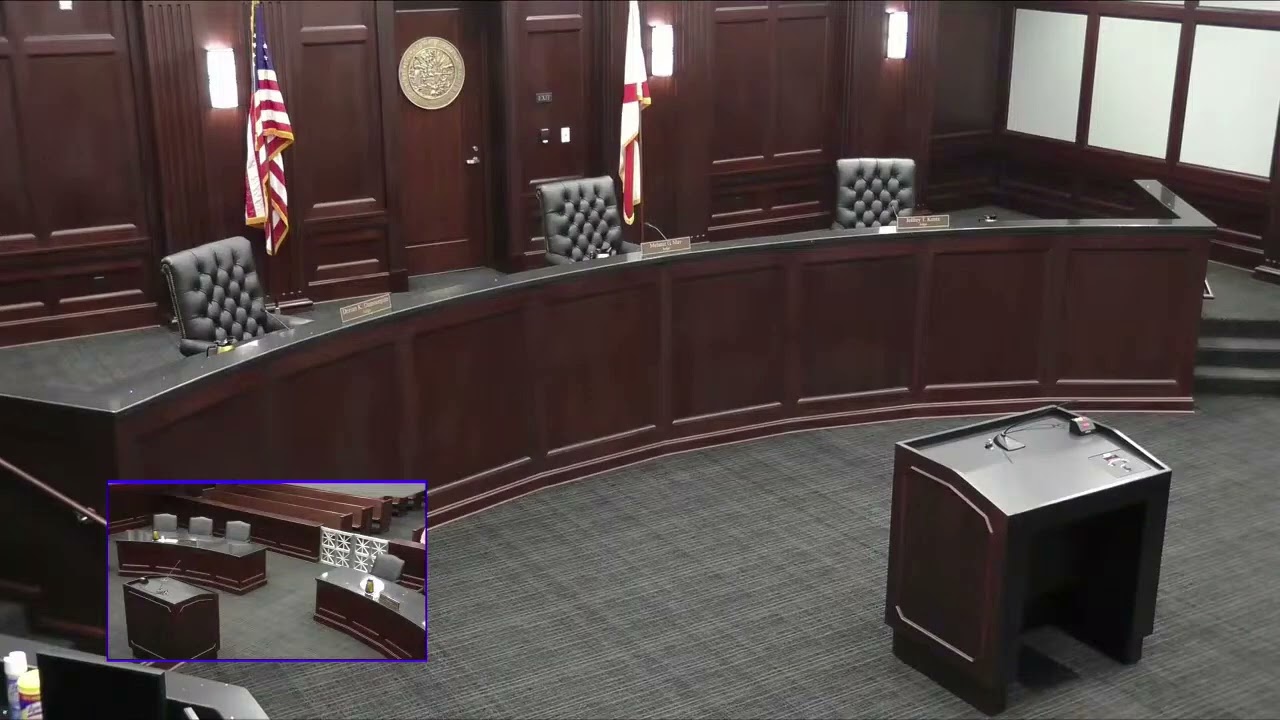
This is the recording of the actual oral argument, posted on the channel. What lawyers and judges say at argument is not the ruling; the decision is summarized above.
🔓 Gun Store Beats the City on Zoning — 2-1, With Judge Warner Dissenting
Read the Law on FloridaRules.net
The statutes and court rules discussed in this article, free to read on FloridaRules.net:
Go Deeper
- Code Enforcement Appeals Get Full Appellate Review (MGM of West Florida v. Manatee County)
- Daytona Beach Vacation Rental Owners Lose on Appeal (Synk v. City of Daytona Beach)
- Miami Beach Short-Term Rentals vs. the City: Injunction Denied (Eisenberg v. Miami Beach)
Frequently Asked Questions
Can a Florida city ban gun stores?
Not as a way of regulating firearms. Under section 790.33, the state occupies the field of firearms regulation. Cities may zone firearms businesses along with other businesses, but not with zoning designed to restrict or prohibit firearm sales.
Can a city make a gun store move to a different zoning district?
It depends on why. In Florida Custom Guns v. City of Dania Beach, the Fourth District held that whether the city’s zoning was designed to restrict gun sales was a jury question, so the city could not win on summary judgment just by pointing out that other businesses were restricted too.
What happens if a Florida city violates the firearms preemption law?
A court must declare the ordinance invalid and enjoin it. Officials who knowingly and willfully violate the statute can be fined up to $5,000, and an adversely affected person or organization can recover damages and attorney’s fees. Good faith is not a defense.
Did the gun store win the Dania Beach case?
It won the appeal, not the case. The Fourth District reversed the city’s summary judgment and sent the case back for trial on the city’s purpose. It also granted appellate fees conditioned on the store ultimately prevailing.
Talk to a Florida real estate litigation lawyer
Weidner Law, P.A. handles Florida real estate disputes, title problems and appeals from St. Petersburg. If you need a real estate litigation lawyer, call (727) 954-8752 or email weidner@mattweidnerlaw.com.
Read the law yourself, free: every Florida statute and court rule is on floridarules.net.
This article is general information about Florida law, not legal advice about your situation. Reading it, watching the videos, or contacting the firm does not create an attorney-client relationship. Every case turns on its own facts, and past results do not guarantee a similar outcome. The hiring of a lawyer is an important decision that should not be based solely upon advertisements.
