
In short: No. Only an owner whose own property is directly acted on by the government can bring a Bert Harris Act claim. In Hardee County v. FINR II, a neurological rehabilitation center sued for $38 million after the county let the phosphate mine next door shrink a quarter-mile mining setback. On May 25, 2017, the Florida Supreme Court held that owners whose property has not been directly acted upon may not state a claim under the Act.
The Facts
FINR II, Inc. runs a neurological rehabilitation center on a large rural campus in Hardee County, next to land owned by a phosphate mining company. At the county’s encouragement, FINR sought a “Rural Center” land use designation, and in 2007 the county approved it. Under the county’s rules, that designation brought a quarter-mile setback that kept mining away from the Rural Center.
Every foot of that setback sat on the mining company’s land, not FINR’s. In 2012 the county granted the mining company a special exception that could reduce the setback to as little as 150 feet. FINR sued under the Bert J. Harris, Jr., Private Property Rights Protection Act, claiming the change cut the value of its property by $38 million.
The trial court dismissed the complaint with prejudice. The Second District reversed and certified conflict with City of Jacksonville v. Smith (Fla. 1st DCA 2015), which had held that an owner cannot bring a Harris Act claim based on government action on an adjacent parcel. The Supreme Court heard argument on February 9, 2017. The points below are what the lawyers argued, not findings.
- The county argued the Act protects only owners whose own property is regulated, that a setback is a use restriction on the neighbor’s land and not a property interest of FINR’s, and that the Act’s one-year limitations period, which runs from when a regulation is first applied to the property at issue, makes no sense for neighbors.
- FINR argued the Act’s definition of an inordinate burden covers an owner left bearing a disproportionate share of a public burden, that “existing use” is defined with reference to compatibility with adjacent land uses, and that the change destroyed the value of its Rural Center designation. It also argued the 2015 amendment narrowing the Act could not be applied to its claim.
- The justices pressed FINR on the statute’s requirement that the government action “directly” restrict or limit the use of the owner’s property.
The Decision
The Florida Supreme Court approved the First District’s decision in Smith, disapproved the Second District’s decision in FINR’s case, and remanded. Its holding: owners whose property has not been directly acted upon by a governmental entity may not state a claim under the Act.
The Court reasoned that the Act requires government action that “directly restricted or limited” the use of the owner’s real property, and the word “directly” has to mean something. Because the Act changes the common law and waives sovereign immunity, it is read narrowly. The setback was a police-power regulation of the neighbor’s land, not a property right belonging to FINR. The Court also pointed to the Act’s drafting history, a 1995 Attorney General opinion, and the Legislature’s 2015 amendment limiting the Act to property “directly impacted” by government action.
Two justices concurred specially, agreeing with the result but saying the plain text alone decided the case. One justice concurred in result only. FINR’s motion for rehearing or clarification was denied on July 17, 2017.
The Law
The Bert Harris Act, section 70.001, gives a property owner a claim for compensation when a specific action of a governmental entity has inordinately burdened an existing use of real property or a vested right to a specific use. It lowered the bar below a constitutional taking, which generally requires the loss of all or nearly all economic use.
“Inordinately burdened” in section 70.001(3)(e) means the action directly restricted or limited the use of real property so that the owner is permanently unable to attain reasonable, investment-backed expectations, or is left with existing or vested uses that are unreasonable.
Current law (2026): the 2015 amendment (chapter 2015-142) defines the property owner as the title holder of real property “directly impacted” by the government action, and limits “real property” to parcels that are the subject of and directly impacted by the action. Later amendments in 2021 shortened the presuit notice period to 90 days and provide that a law can be “first applied,” starting the one-year claim period, upon enactment and notice when its impact on the property is clear and unequivocal. Read the current statute before giving notice of a claim.
Lessons
- A Harris Act claim belongs to the owner of the land the government actually regulated. A neighbor hurt by a rezoning, variance or special exception next door does not have one.
- A setback that protects you but sits on your neighbor’s land is a regulation of your neighbor, not a property right you own. If you need protection that lasts, negotiate an easement or recorded restriction.
- If you think a development approval next door violates the comprehensive plan, the county argued the right tool is a timely consistency challenge or certiorari petition, not a Harris Act suit. Those deadlines are short.
- The one-year Harris Act claim period and the presuit notice rules are strict. Get advice as soon as a regulation is applied to your own property.
Source: Hardee County v. FINR II, Inc., 221 So. 3d 1162 (Fla. May 25, 2017), No. SC15-1260; Florida Supreme Court docket (rehearing denied July 17, 2017).
Watch the Oral Argument
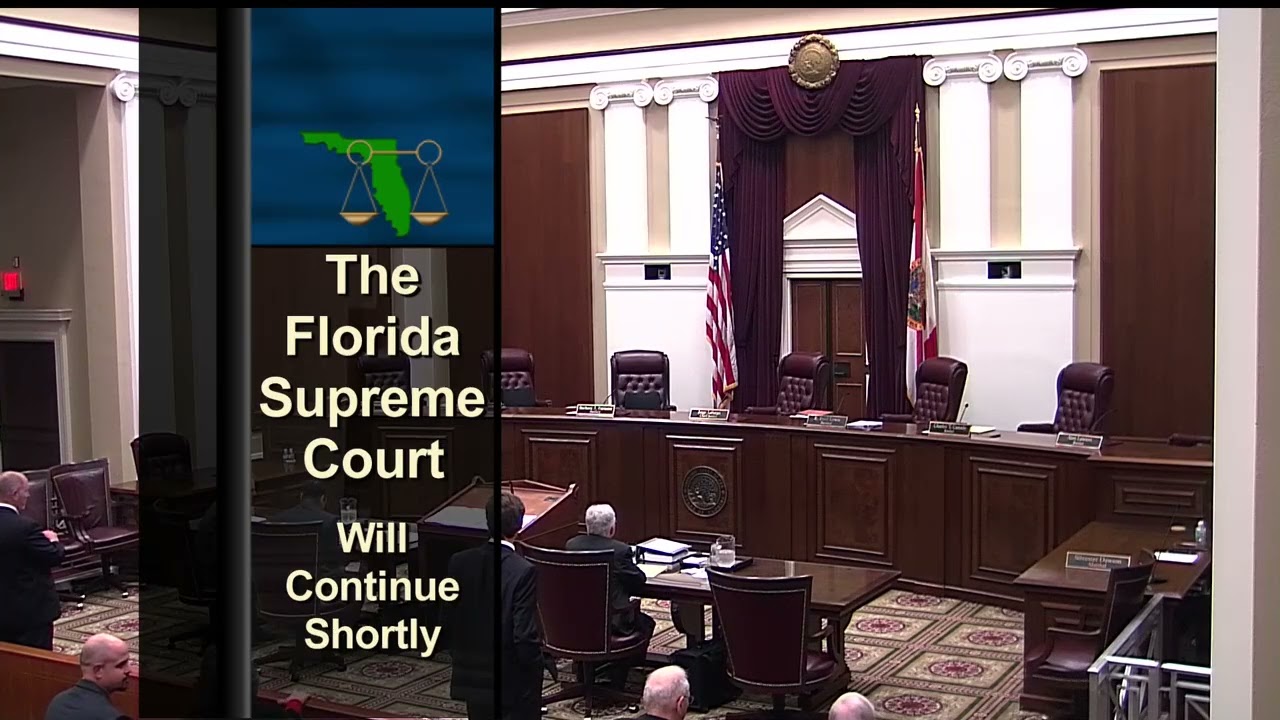
This is the recording of the actual oral argument, posted on the channel. What lawyers and judges say at argument is not the ruling; the decision is summarized above.
🏡⚖️ Can Neighbors Sue Over Property Rights? Harris Act SHOWDOWN | Hardee County v. FINR SC15-1260
Go Deeper
- Florida Real Estate: Bert Harris Claims, Flood Insurance and Construction Permits
- Daytona Beach Vacation Rental Owners Lose on Appeal (Synk v. City of Daytona Beach)
- Code Enforcement Appeals Get Full Appellate Review (MGM of West Florida v. Manatee County)
Frequently Asked Questions
Can I sue the county under the Bert Harris Act for something it approved on my neighbor's property?
No. In Hardee County v. FINR II, the Florida Supreme Court held that owners whose property has not been directly acted upon by the government may not state a claim under section 70.001. The 2015 amendment to the Act says the same thing.
What is an inordinate burden under the Bert Harris Act?
It is government action that directly restricts or limits the use of your real property so that you permanently cannot attain reasonable, investment-backed expectations, or are left with unreasonable uses. It is a lower bar than a constitutional taking, but it still requires a direct restriction on your own land.
How long do I have to bring a Bert Harris Act claim in Florida?
The claim must be presented within one year after the law or regulation is first applied to your property, and you must give the government written notice with an appraisal at least 90 days before filing suit under the current version of section 70.001. The one-year period is tolled while you pursue required administrative or judicial proceedings.
Is a zoning setback on my neighbor's land my property right?
Generally no. The county argued, and the Supreme Court agreed, that a setback is a police-power use restriction on the regulated parcel, not an interest in land owned by the neighbor it protects. An easement or recorded covenant is different.
Talk to a Florida real estate litigation lawyer
Weidner Law, P.A. handles Florida real estate disputes, title problems and appeals from St. Petersburg. If you need a real estate litigation lawyer, call (727) 954-8752 or email weidner@mattweidnerlaw.com.
Read the law yourself, free: every Florida statute and court rule is on floridarules.net.
This article is general information about Florida law, not legal advice about your situation. Reading it, watching the videos, or contacting the firm does not create an attorney-client relationship. Every case turns on its own facts, and past results do not guarantee a similar outcome. The hiring of a lawyer is an important decision that should not be based solely upon advertisements.
