
In short: Not anymore. For years, section 337.27(2) let the Florida Department of Transportation take an entire parcel, not just the strip it needed, when a whole taking would cost less than a partial taking plus severance and business damages; the Legislature removed that power in 1999 (chapter 99-385). In this Griffin Road case, the Fourth District held in 1998 that the judge, not a jury, decides whether the whole taking saves money. The owner and tenants asked the Florida Supreme Court to review it, but on October 5, 2000 the Court dismissed review as improvidently granted, leaving the Fourth District’s decision in place.
The Facts
The Department of Transportation was widening Griffin Road in Davie to six lanes. According to the Fourth District, the road strip it needed would bisect a one-story office building of about 2,500 square feet, leaving roughly 860 square feet usable. The building housed small business tenants; at argument, tenants’ counsel described a jewelry store at the front that was almost entirely within the strip and a bookkeeper at the back who was not. The petitioners in the Supreme Court were Dorothy Murphy and others, the property owner and tenants.
A partial taking would have exposed DOT to severance damages for the owner and business damages for the tenants. DOT instead asked to condemn the whole parcel under section 337.27(2), arguing that a whole taking would cost less. Its evidence put the cost of a partial taking about $178,000 higher. The owner and tenants disputed DOT’s numbers.
The trial judge refused to enter a quick-take order of taking for the whole parcel. He found the cost comparison was a factual dispute and deferred it until a jury had valued both a whole taking and a partial taking. DOT appealed. While the appeal was pending, DOT took the road strip it needed by a stipulated partial order of taking so the project could go forward.
The Fourth District reversed in State, Department of Transportation v. Barbara’s Creative Jewelry, Inc., 728 So. 2d 240 (Fla. 4th DCA 1998), with one judge dissenting. It held that comparing acquisition costs under section 337.27(2) is a question of necessity and public purpose for the judge, not a compensation question for the jury. Once DOT showed reasonable necessity, the owners had to prove bad faith or abuse of discretion. The court certified to the Supreme Court the question whether a trial court may deny a quick taking and defer the extent of the take until a jury values both a whole and a partial taking.
In the Supreme Court, the parties argued as follows. These are the lawyers’ positions, not findings.
- The landowner argued that whether a whole taking actually saves money is part of the public purpose that must be proved before property is taken, and that only a single jury trial valuing both alternatives can answer it.
- Counsel for two tenants argued the trial judge simply chose a sensible procedure within his discretion, and that DOT’s approach turned the case upside down: owners would argue for low damages and the State for high damages.
- DOT argued that public purpose and necessity have always been questions for the judge, and that owners stalled cases by withholding business records. Its lawyer told the Court the legislature had just repealed the excess condemnation provision effective January 1, 2000, and the justices asked why the Court should decide the case at all.
The Decision
On October 5, 2000, the Florida Supreme Court dismissed the case in a short unsigned order. It said it had accepted review but, on further consideration, found that review was improvidently granted. One justice dissented without an opinion. The citation is Murphy v. Florida Department of Transportation, 769 So. 2d 1040 (Fla. 2000).
The Supreme Court did not answer the certified question and wrote nothing about who decides an excess condemnation dispute. The Fourth District’s 1998 decision was left standing as written.
The Law
Section 337.27(2), in effect from the mid-1980s until 1999, allowed DOT to acquire an entire parcel when doing so would cost less than a partial taking plus severance and business damages. That is “excess condemnation”: taking more than the project physically needs in order to save money. The Legislature’s goal, as DOT’s lawyer described it at argument, was to cut acquisition costs in a state that pays business damages, severance damages and the owner’s attorney’s fees.
Compensation in Florida eminent domain cases is set by a 12-person jury, and eminent domain trials get preference over other civil cases under section 73.071. Section 73.071(3)(b) adds severance damages to the remainder and, for road right-of-way takings, business damages for an established business on the adjoining land. Those business damages are available only in a partial taking, which is why a whole taking could be cheaper for the State.
A quick taking under chapter 74 lets the condemning authority get title and possession before final judgment by depositing a good faith estimate of value; section 74.031 covers the order of taking.
Current law (2026): the excess condemnation subsection is gone. Section 337.27 was amended by chapter 99-385, Laws of Florida, and subsection (2) now says only that title to land acquired in the department’s name vests in the state. DOT’s condemnation power under subsection (1) is for land necessary for transportation purposes. In 2006 Florida voters also added Article X, section 6(c) to the Florida Constitution, restricting the transfer of condemned property to private parties.
Lessons
- If the government wants your whole parcel when it only needs a strip, ask which statute it relies on and whether the extra land is truly necessary for the project. The cost-saving whole take that DOT used in this case no longer exists in section 337.27.
- Business damages in Florida are a creature of statute, not the constitution. They depend on a partial taking and on the business meeting the years-in-operation rule in section 73.071(3)(b).
- A dismissal for “improvidently granted” decides nothing about the legal question. The lower court’s opinion remains the law of that district.
- Keep business records organized. DOT’s lawyer told the Court that owners who withhold records make it hard to value business damages, and courts notice which side is cooperating.
Source: Murphy v. Florida Department of Transportation, 769 So. 2d 1040 (Fla. Oct. 5, 2000), No. SC93,551 (review dismissed as improvidently granted); decision under review: State, Department of Transportation v. Barbara’s Creative Jewelry, Inc., 728 So. 2d 240 (Fla. 4th DCA June 24, 1998).
Watch the Oral Argument
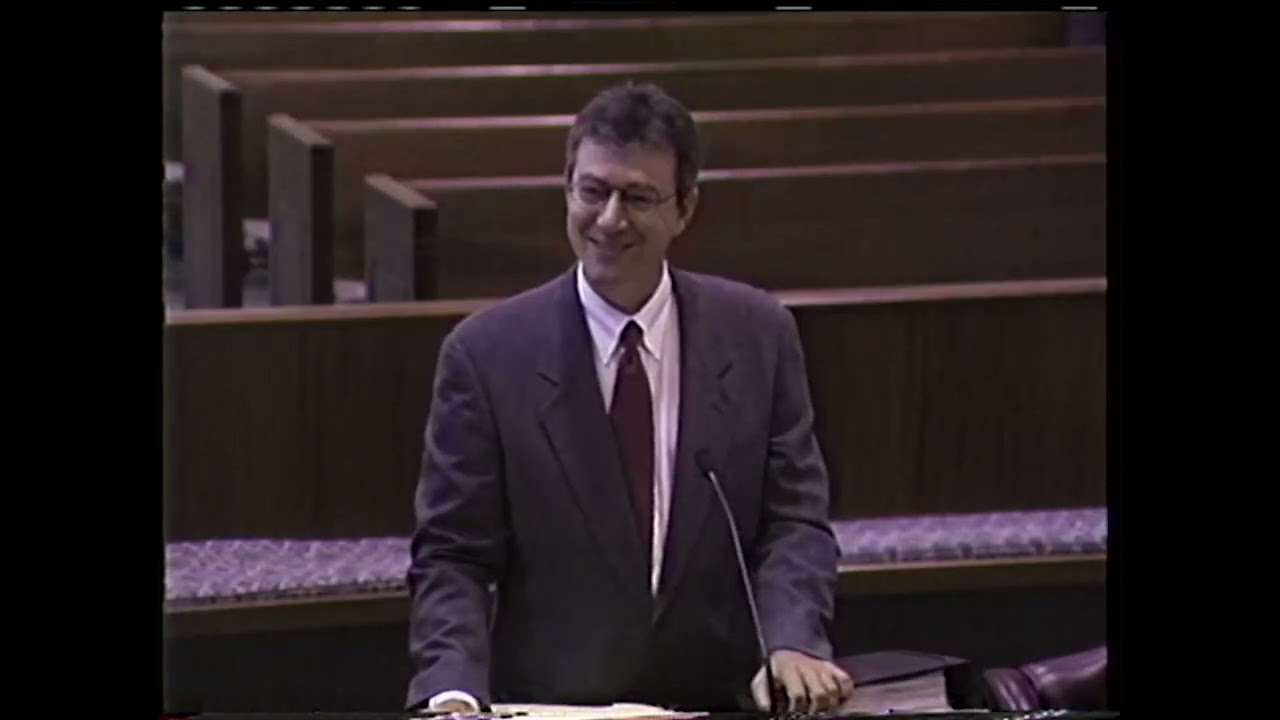
This is the recording of the actual oral argument, posted on the channel. What lawyers and judges say at argument is not the ruling; the decision is summarized above.
🎯 Can the State Take More Land Than It Needs for a Road? | Murphy v. Florida DOT
Go Deeper
- Does MRTA Protect FDOT Land Held in Fee for a Drainage Canal? (DOT v. Mid-Peninsula Realty)
- Florida Real Estate: Bert Harris Claims, Flood Insurance and Construction Permits
Frequently Asked Questions
Can the government take more of my property than it needs for a road in Florida?
Not for cost savings under current law. The old section 337.27(2) let DOT take a whole parcel when that was cheaper than a partial taking plus damages, but that provision was removed by chapter 99-385. Today DOT’s condemnation power under section 337.27(1) is for land necessary for transportation purposes, and necessity can be challenged.
Who decides how much I get paid in a Florida eminent domain case?
A 12-person jury decides compensation under section 73.071. Questions of public purpose and necessity are decided by the judge, which is why the Fourth District in this case treated the whole-take cost comparison as a question for the court.
What are business damages in a Florida condemnation case?
They are payment for the probable damage to an established business caused by a partial taking of land for a road right-of-way. Under section 73.071(3)(b), the business must be on the adjoining land and must have existed for more than five years. They are not available when the whole parcel is taken.
What does it mean when the Florida Supreme Court dismisses a case as improvidently granted?
It means the Court decided, after accepting the case, that it should not have taken it. It issues no ruling on the merits. In Murphy, that left the Fourth District’s 1998 opinion in place.
Talk to a Florida real estate litigation lawyer
Weidner Law, P.A. handles Florida real estate disputes, title problems and appeals from St. Petersburg. If you need a real estate litigation lawyer, call (727) 954-8752 or email weidner@mattweidnerlaw.com.
Read the law yourself, free: every Florida statute and court rule is on floridarules.net.
This article is general information about Florida law, not legal advice about your situation. Reading it, watching the videos, or contacting the firm does not create an attorney-client relationship. Every case turns on its own facts, and past results do not guarantee a similar outcome. The hiring of a lawyer is an important decision that should not be based solely upon advertisements.
