
In short: Yes, it can happen: if the owner lets the arbitrators decide whether the contract is enforceable, a court generally cannot undo their answer, even when the contractor was unlicensed. In The Village at Dolphin Commerce Center, LLC v. Construction Service Solutions, LLC, the owner raised the licensing defense in arbitration, lost, and then asked the court to refuse to enforce the award. The Third District affirmed the confirmation of the award and the foreclosure of the contractor’s lien on May 21, 2014, and the Florida Supreme Court later denied review.
The Facts
In 2009 the owner, The Village at Dolphin Commerce Center, hired Construction Service Solutions (CSS) to build a warehouse in Miami-Dade. When the contract was signed, CSS had no qualifying agent registered with the Department of Business and Professional Regulation. It later became licensed, but under section 489.128 licensure is generally measured when the contract is made.
The project went badly. In July 2010 CSS recorded a claim of lien and demanded arbitration under the contract’s American Arbitration Association clause. The owner answered in arbitration, raising as its first affirmative defense that the contract was unenforceable under section 489.128, and counterclaimed. It also sued in circuit court for a declaration that the lien was invalid. The court compelled arbitration and stayed the lawsuit.
After twelve days of hearings, with no transcript, the panel ruled for CSS. A general magistrate recommended confirming the award, and the trial court entered judgment for CSS, enforced its lien, and awarded fees under section 713.29. The owner appealed (No. 3D13-1499). The points below are what the lawyers argued, not findings by the court.
- The owner argued an unlicensed contractor can never enforce a construction lien, citing section 713.02 and section 489.128, and that the lien issue was never before the arbitrators.
- It argued a court cannot enforce an illegal contract just because an arbitrator entered an award on it, relying on Earth Trades and on the Fourth District’s Jupiter Medical Center decision.
- The panel pressed the owner on why it did not object to the arbitrators’ jurisdiction, since AAA rules require that objection in the answering statement, and pointed out that an affirmative defense is not a jurisdictional objection.
- CSS argued the owner submitted the licensing issue to the panel, no ground to vacate under section 682.13 applied, and the court’s role on the lien was simply to enforce the award.
The Decision
The Third District affirmed in a written opinion on May 21, 2014. It held that the owner made enforceability part of the arbitration when it raised it in its answering statement and did not object to the panel deciding it. Under Buckeye Check Cashing, Inc. v. Cardegna, a challenge to the contract as a whole, rather than to the arbitration clause itself, goes to the arbitrator. A court may vacate an award only on the narrow statutory grounds, and disagreeing with how the arbitrators handled illegality is not one of them. The court distinguished Earth Trades and said the Fourth District’s Jupiter Medical Center ruling appeared inconsistent with Buckeye.
On the lien, the court held that CSS was entitled to a final judgment of foreclosure as a means of enforcing the arbitrator’s award, and it affirmed both the confirmation of the award and the enforcement of the lien.
Rehearing and certification were denied on July 17, 2014, and the court granted CSS its appellate fees. The owner sought Florida Supreme Court review. That court held the case for Visiting Nurse Ass’n of Florida v. Jupiter Medical Center (decided July 10, 2014), in which it held that courts cannot review a claim that an arbitrator’s construction of a contract renders it illegal, and then denied review in this case on March 9, 2015.
The Law
Under section 489.128, a contract entered into by an unlicensed contractor is unenforceable in law or in equity by that contractor, and no lien or bond claim exists in its favor when the contract is unenforceable under that section. Whether a contractor was unlicensed is measured on the contract’s effective date or, if none is stated, when the last party signed it.
The Florida Arbitration Code allows a court to vacate an award only on limited grounds listed in section 682.13, such as fraud, evident partiality, or arbitrators exceeding their powers. Construction liens are governed by chapter 713, including section 713.08 on claims of lien and section 713.29 on prevailing-party fees in lien enforcement actions.
Lessons
- If you believe a contract is void, object to the arbitrators deciding that question at the start, in writing, and consider seeking a court ruling before arbitrating. An affirmative defense alone may submit the issue.
- Once arbitrators decide an issue, courts will rarely second-guess the result, even on a strong statutory defense like unlicensed contracting.
- A confirmed award can support foreclosure of a construction lien and an award of lien-law attorney’s fees.
- Owners: check a contractor’s license and qualifier before signing. Contractors: be licensed when the contract is signed.
Source: The Village at Dolphin Commerce Center, LLC v. Construction Service Solutions, LLC, No. 3D13-1499 (Fla. 3d DCA May 21, 2014); ACIS docket (review denied by the Florida Supreme Court Mar. 9, 2015).
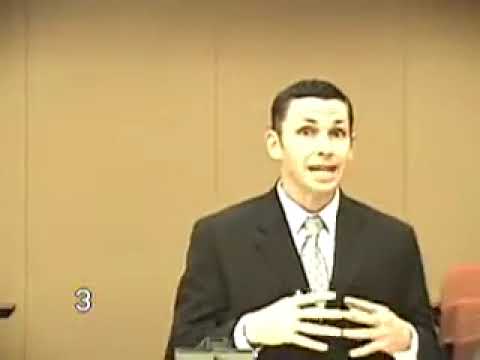
Watch the Oral Argument
These are recordings of the actual oral argument, posted on the channel in two uploads. What lawyers and judges say at argument is not the ruling; the decision is summarized above.
⚖️ An Unlicensed Contractor's Lien — Can an Arbitration Award Make It Enforceable?
🔏 Must a Court Enforce an Illegal Contract Just Because an Arbitrator Signed Off?
Go Deeper
- Unlicensed Contractor's Lien and a Sanctions Award Reversed (MacAlister v. Bevis)
- When Is an Overstated Construction Lien Fraudulent in Florida? (Cherry Bomb Electric)
- Sanctions for Fighting an Arbitrator's No-Prevailing-Party Ruling (Wells v. Halmac)
Frequently Asked Questions
Can an unlicensed contractor file a lien in Florida?
Generally no. Section 489.128 makes the contract unenforceable by an unlicensed contractor and says no lien or bond claim exists in its favor. But in Village at Dolphin, the owner let arbitrators decide that defense, lost, and the court enforced the award and the lien.
Can I get an arbitration award thrown out because the contract was illegal?
Usually not if the illegality issue was submitted to the arbitrators. Florida courts may vacate awards only on the narrow grounds in section 682.13, and the Florida Supreme Court has held that courts cannot review a claim that an arbitrator’s reading of a contract makes it illegal.
What if the contractor got licensed after signing the contract?
Getting licensed later generally does not cure the problem, because licensure is measured on the contract’s effective date or signing date. In this case, the contractor got licensed after signing, but the arbitration result still controlled.
How do I stop arbitrators from deciding whether my contract is void?
Object to their jurisdiction over that issue at the start, as the arbitration rules require, and consider asking a court to decide it before arbitration. Raising the defense on the merits can be treated as agreeing to let the arbitrators decide it.
Talk to a Florida real estate litigation lawyer
Weidner Law, P.A. handles Florida real estate disputes, title problems and appeals from St. Petersburg. If you need a real estate litigation lawyer, call (727) 954-8752 or email weidner@mattweidnerlaw.com.
Read the law yourself, free: every Florida statute and court rule is on floridarules.net.
This article is general information about Florida law, not legal advice about your situation. Reading it, watching the videos, or contacting the firm does not create an attorney-client relationship. Every case turns on its own facts, and past results do not guarantee a similar outcome. The hiring of a lawyer is an important decision that should not be based solely upon advertisements.
