
In short: Not after it spends years using the court process instead. Florida law lets a party lose its right to arbitrate by acting inconsistently with it, and a stranger to the contract must also show it can enforce the clause at all. In REPH IV, LLC v. Merco Group at Aventura Landings I, Inc., the assignee of a construction lender moved to compel arbitration of buyers’ claims to their deposits after a receivership claims process had run for years; the trial court denied the motion, and the Third District affirmed without a written opinion on May 2, 2012.
The Facts
Merco Group entities sold units in a Miami-Dade residential project that was never completed. According to the lawyers at argument, buyers signed purchase contracts with the seller that required arbitration of disputes arising under or related to the contracts, and the units were supposed to be finished by June 2008. The construction lender’s loan went into default, a receiver was appointed in 2008, and the lender’s rights passed through a chain of assignments, each without recourse, to REPH IV, LLC. A foreclosure judgment of about $49 million was entered in 2010.
The trial court set up a claims process in the receivership for buyers to assert rights to their deposits, much of which was held in escrow. The order said it was a pre-arbitration procedure that would not affect any party’s right to seek arbitration. Buyers who did not file claims lost their deposits to the lender’s side. Roughly two years after the process began, REPH IV moved to compel arbitration of the remaining buyers’ claims. The trial court denied the motion, finding the right had been waived, and REPH IV appealed that non-final order (No. 3D11-2219). The case was argued on April 17, 2012. The points below are what the lawyers argued, not findings by the court.
- REPH IV argued review was de novo, that Florida policy favors arbitration, and that it could not have waived a right the court’s own order expressly preserved. It said it could not demand arbitration earlier because it was only a creditor until the foreclosure judgment.
- The panel asked how REPH IV could enforce the arbitration clause at all, since it was not a party to the purchase contracts and had not taken an assignment of the seller’s obligations.
- The buyers argued REPH IV took the benefit of the claims process, including the deposits of buyers who never filed claims, sat on its rights for years, and only then sought arbitration. They said the trial judge, who ran the receivership, was best placed to decide waiver.
- One buyers’ lawyer argued REPH IV was not a successor developer: the statutory definition of developer, he said, requires taking on the liabilities and not just the assets, in writing, and no such written assumption was ever produced. Under REPH IV’s theory, he said, the buyers’ contract remedies were simply gone.
The Decision
The Third District affirmed on May 2, 2012. The ACIS docket lists the disposition as “Per Curiam Affirmed,” with no written opinion, and the mandate issued on May 18, 2012.
The affirmance leaves the order denying arbitration in place. Without an opinion, it does not tell us whether the court relied on waiver, on REPH IV’s inability to enforce the clause as a non-signatory, or on something else. It decides only this case.
The Law
Under the Revised Florida Arbitration Code, section 682.03, a court must order arbitration when a party shows an enforceable agreement to arbitrate and the other side refuses. Florida courts ask three questions: is there a valid written agreement, is there an arbitrable issue, and has the right to arbitrate been waived. Waiver can be found when a party acts inconsistently with arbitration, for example by actively litigating the dispute in court.
Arbitration clauses usually bind only the parties to the contract and their proper assignees. A lender or investor that acquires a failed project through foreclosure or assignment often wants the developer’s rights without the developer’s obligations. Whether it becomes a developer depends on the governing statute and documents. For condominiums, section 718.103 defines a developer as one who creates a condominium or offers parcels for sale in the ordinary course of business, and the Distressed Condominium Relief Act in section 718.703 and the sections around it sets special rules for bulk buyers.
Lessons
- If you want to arbitrate, say so early and act consistently with it. Language in a court order preserving the right may not save a party that uses the court process for years.
- A lender or buyer of a distressed project should decide at the start whether it is stepping into the developer’s contracts, with their burdens, or only enforcing its lien.
- Pre-construction buyers should file claims on time in any receivership. Buyers who did not appear here lost their deposits.
- Read the assignment documents. Assignments without recourse and without an assumption of liabilities may limit what the assignee can enforce.
- A per curiam affirmance decides only this case.
Watch the Oral Argument
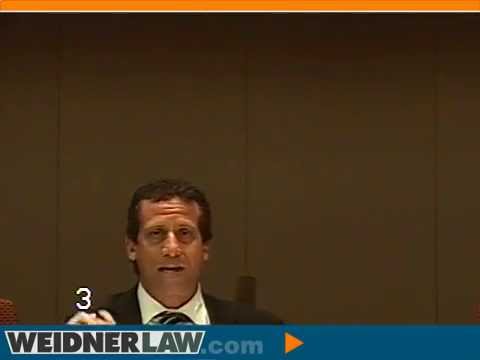
This is the recording of the actual oral argument, posted on the channel. What lawyers and judges say at argument is not the ruling; the decision is summarized above.
🔏 Three Assignments, None Assuming the Liabilities — Who Is the Developer Now?
Go Deeper
- Years of Litigation Did Not Waive the Right to Arbitrate (13 Parcels v. Laquer)
- Can a Foreclosure Receiver Finish Building the Houses? (Crestview II v. TotalBank)
- A Condo Developer’s Default Did Not Mean a Guarantee for Every Unit (Merco Group at Akoya v. General Computer Services)
Frequently Asked Questions
How do you waive the right to arbitration in Florida?
By acting inconsistently with it, most often by actively litigating the dispute in court before demanding arbitration. In REPH IV v. Merco, the trial court found waiver after a lender’s assignee used a receivership claims process for about two years, and the Third District affirmed without an opinion.
Can someone who didn't sign the contract enforce its arbitration clause?
Sometimes, through assignment, agency, third-party beneficiary status or equitable estoppel. But the non-signatory has to fit one of those theories. The panel in REPH IV questioned how a lender’s assignee could enforce the buyers’ arbitration clause without taking on the seller’s obligations.
What happens to my pre-construction deposit if the developer goes into foreclosure?
It depends on where the money is held and on the contract. Escrowed deposits may be protected, and courts often set up a claims process. In REPH IV, buyers who did not file claims in the receivership lost their deposits to the lender’s side.
Does a bank that forecloses on a condo project become the developer?
Not automatically. Under section 718.103, a developer is one who creates the condominium or offers units for sale in the ordinary course of business, and special rules apply to bulk buyers of distressed condominiums. Whether a lender or its assignee takes on the developer’s contract obligations depends on what it actually assumed.
Talk to a Florida real estate litigation lawyer
Weidner Law, P.A. handles Florida real estate disputes, title problems and appeals from St. Petersburg. If you need a real estate litigation lawyer, call (727) 954-8752 or email weidner@mattweidnerlaw.com.
Read the law yourself, free: every Florida statute and court rule is on floridarules.net.
This article is general information about Florida law, not legal advice about your situation. Reading it, watching the videos, or contacting the firm does not create an attorney-client relationship. Every case turns on its own facts, and past results do not guarantee a similar outcome. The hiring of a lawyer is an important decision that should not be based solely upon advertisements.
