
In short: Not always. Whether a master association is a “condominium association” depends on the version of the statute in effect when it was created and on whether it operates condominium property. In Dimitri v. Commercial Center of Miami Master Association, the Third District held on August 8, 2018 that a master association formed in 1982, which maintained only the shared streets and landscaping outside the sub-associations’ condominiums, was not subject to chapter 718’s records requirements.
The Facts
Commercial Center of Miami is a development of commercial warehouse and office condominium buildings. Each building has its own sub-association, which maintains its building and units. Over them sits the Commercial Center of Miami Master Association, Inc., formed in 1982 under a recorded declaration of covenants. Its articles describe it as a not-for-profit corporation under chapter 617. It maintains the common property outside the sub-associations, such as private streets and landscaping, and can assess only for that common property.
Benedetto Dimitri owns six commercial condominium units in one sub-association. In March 2015 he asked the master association for its records under the condominium statute. When it did not respond as the statute requires, he sued for declaratory and injunctive relief and damages, claiming the master association was subject to chapter 718. The trial court granted summary judgment for the master association.
At argument the panel spent time on jurisdiction and mootness: the master association had given Dimitri access to a room of records, and the court asked what more an injunction could give him. On the merits:
- Dimitri argued the master association was really a condominium association because all of its members were condominium unit owners and the common areas served only the condominiums (the “constituency” and “function” tests some courts have used).
- He said the real point was the declaration that chapter 718 applies, which would give him the statute’s records protections and access to state regulators.
- The master association argued that under the 1981 statute in effect when it was created, an association had to be the entity responsible for operating the condominium, and the sub-association documents reserved that job to the sub-associations. It argued the broader 1991 definition could not be applied retroactively.
The Decision
The Third District affirmed the summary judgment on August 8, 2018. Dimitri v. Commercial Ctr. of Miami Master Ass’n, 253 So. 3d 715 (Fla. 3d DCA 2018).
First, the 1991 amendment that broadened the definition of “association” does not apply retroactively to this 1982 declaration. The effective-date provision did not show clear legislative intent to apply it retroactively, and the declaration did not incorporate later amendments to the statute.
Second, under the 1981 definition an association is the corporate entity responsible for the operation of a condominium, meaning the administration and management of condominium property. The master association did not administer or manage condominium property, so it was not a condominium association. The court relied on the Florida Supreme Court’s decisions in Raines v. Palm Beach Leisureville Community Ass’n and Siegel.
Third, the court declined to apply the constituency and function tests. The Supreme Court had quashed the Third District decision that used them, and they are administrative interpretations the court did not need to follow when the statute’s words were plain.
The Law
Section 718.103 defines “association.” Before January 1, 1992, it meant the corporate entity responsible for the operation of a condominium. The 1991 amendment added entities that operate or maintain other real property in which unit owners have use rights, where membership is limited to unit owners and is a required condition of ownership.
Section 718.111(12) lists the official records a condominium association must keep and gives unit owners the right to inspect and copy them. If the master association is not a condominium association, those rules do not apply to it.
A not-for-profit corporation’s members have their own, narrower inspection rights under section 617.1602. If the master association is a homeowners’ association, section 720.303 may apply. Which statute governs depends on the community’s documents and when it was formed.
Lessons
- Check when the master association was formed. Dimitri turned on the 1981 version of the statute.
- Read the declarations together. Language reserving “operation of the condominium” to sub-associations carried the day here.
- If chapter 718 does not apply, look to chapter 617 or chapter 720 for a records right before you sue.
- Getting access to a room of boxes may moot an injunction claim even if the records are disorganized; be clear about what relief you want.
Source: Dimitri v. Commercial Center of Miami Master Ass’n, No. 3D16-2549, 253 So. 3d 715 (Fla. 3d DCA Aug. 8, 2018); ACIS docket.
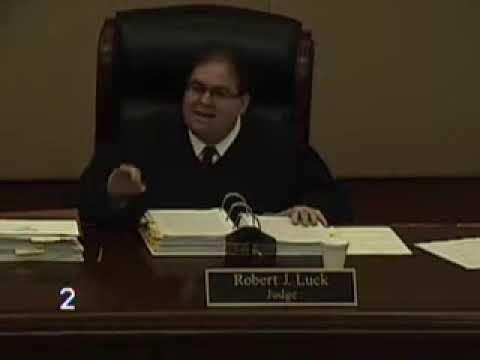
Watch the Oral Argument
This is the recording of the actual oral argument, posted on the channel. What lawyers and judges say at argument is not the ruling; the decision is summarized above.
Is a Commercial Master Association a Condominium Association for Chapter 718 Records Access?
Go Deeper
- Can a Master Association Strip Condo Owners' Rights by Amendment? (De Soleil v. Perrin)
- Can a Shared-Garage Owner Charge Condo Residents Without a Written Rule? (Estoril v. Mayfield)
- Can You Sue Condo Board Members Personally for Bad Faith? (Dobal v. Villas at South Beach)
Frequently Asked Questions
Can I see my master association's financial records?
Usually you have some right, but which statute gives it matters. A condominium association must follow section 718.111(12); a master association that is not a condominium association may be governed by chapter 617 or chapter 720 instead. In Dimitri, the court held chapter 718 did not apply to a 1982 master association.
Is a master association governed by the Florida Condominium Act?
Only if it fits the statutory definition of “association” in section 718.103 that applies to it. For associations created after the 1991 amendment, the definition is broader. For a 1982 master association that did not operate condominium property, the answer in Dimitri was no.
Do condo law changes apply to older condominiums?
Not automatically. Courts look at whether the Legislature clearly intended the change to apply retroactively and whether the declaration incorporates the statute “as amended.” Dimitri refused to apply the 1991 definition to a 1982 declaration that did not incorporate later amendments.
What is the difference between a master association and a condo association?
A condominium association operates the condominium property: the units and common elements of a specific condominium. A master association often maintains shared property such as roads, gates and landscaping for several condominiums or neighborhoods. Dimitri shows that difference can decide which statute governs.
Talk to a Florida real estate litigation lawyer
Weidner Law, P.A. handles Florida real estate disputes, title problems and appeals from St. Petersburg. If you need a real estate litigation lawyer, call (727) 954-8752 or email weidner@mattweidnerlaw.com.
Read the law yourself, free: every Florida statute and court rule is on floridarules.net.
This article is general information about Florida law, not legal advice about your situation. Reading it, watching the videos, or contacting the firm does not create an attorney-client relationship. Every case turns on its own facts, and past results do not guarantee a similar outcome. The hiring of a lawyer is an important decision that should not be based solely upon advertisements.
