
In short: In Rich v. Narog, the son serving as personal representative of his father’s Monroe County estate paid 15 debts that no one had filed as claims, including about $1.37 million to himself for a boat loan. The beneficiaries objected, and the trial court surcharged him about $2.54 million on summary judgment. On September 21, 2022, the Third District affirmed, holding that his conclusory affidavit was not enough to create a fact issue under Florida’s new summary judgment standard.
The Facts
John W. Rich, Sr. died on December 30, 2011. His son, John W. Rich, Jr., opened formal administration in Monroe County in February 2012 and served as personal representative. No creditor claims were filed, and in March 2014 he filed a verified statement that the estate had no known creditors.
In November 2020 he filed a final accounting covering 2011 through 2019. It showed 15 disbursements totaling about $2.41 million: thirteen payments listed as debts of the decedent, an accounts receivable payoff, and a $1,368,675 payment to himself for a boat loan. The beneficiaries objected, made the proceeding adversary and sought a surcharge. They argued the payments were barred by section 733.710 and that he had not given the notice the probate rules require when a personal representative pays his own claim.
Rich’s defense, supported by his affidavit, was that the boat loan was owed by his father’s British Virgin Islands company, not his father, and that the other payments were debts owed to companies in which his father held interests. The trial court granted summary judgment on July 13, 2021, and surcharged him about $2.54 million. The points below are what the lawyers argued on appeal.
- Rich argued his affidavit on personal knowledge created a genuine dispute, that the boat loan was not a debt of the decedent, and that section 733.710 does not reach in rem claims against assets in other states.
- He argued the beneficiaries would be unjustly enriched because estate money preserved the value of stock they later received.
- The beneficiaries argued he never filed a claim or gave notice, said nothing about the loan for years, and that his own accounting listed the payments as estate disbursements.
The Decision
The Third District affirmed on September 21, 2022, in Rich v. Narog, 366 So. 3d 1111 (Fla. 3d DCA 2022).
Applying Florida’s new summary judgment standard, the court held that once the beneficiaries showed Rich paid his own claim without filing it or giving notice, a presumption arose that the surcharge was proper, and he had to rebut it with significantly probative evidence. His affidavit was conclusory. It offered no promissory note, corporate minutes, sale documents or bank records and did not explain their absence. The court noted the same affidavit likely would have been enough under the old standard, but the new standard placed a higher burden on the personal representative.
The other 14 payments failed too, because Rich’s own accounting and affidavit showed they were personal debts of the decedent. The court declined to address unjust enrichment, which was raised only at oral argument.
The Law
Section 733.710 is Florida’s statute of nonclaim. Two years after death, neither the estate, the personal representative nor the beneficiaries are liable for a claim that was not timely presented. The Florida Supreme Court has described it as a jurisdictional bar that cannot be extended. Section 733.703 requires claims to be presented in writing and filed in the probate case.
A personal representative who holds a claim against the estate is still a creditor and must follow the rules. Florida Probate Rule 5.490(e) sets the notice requirements that apply to a personal representative’s own claim. Under section 733.609, a personal representative who breaches a fiduciary duty is personally liable for the resulting loss.
The court also relied on the rule that a corporation’s assets are not estate assets; the estate owns the stock, not the company’s property.
Current law (2026): Florida Rule of Civil Procedure 1.510 has followed the federal summary judgment standard since May 1, 2021. A nonmoving party must come forward with significantly probative evidence, and conclusory affidavits will not do. This case shows how that change applies in probate litigation.
Lessons
- A personal representative who is owed money by the estate must file a claim and follow the probate rules like any other creditor.
- Do not pay unfiled claims, especially to yourself or to companies you are connected to, without notice to the beneficiaries or court approval.
- Document everything. A loan with no note, no minutes and no bank records will not survive summary judgment under the current standard.
- Your accounting is evidence. An affidavit that contradicts how you reported a payment will carry little weight.
Source: Rich v. Narog, No. 3D21-1631, 366 So. 3d 1111 (Fla. 3d DCA Sept. 21, 2022) (affirmed).
Watch the Oral Argument
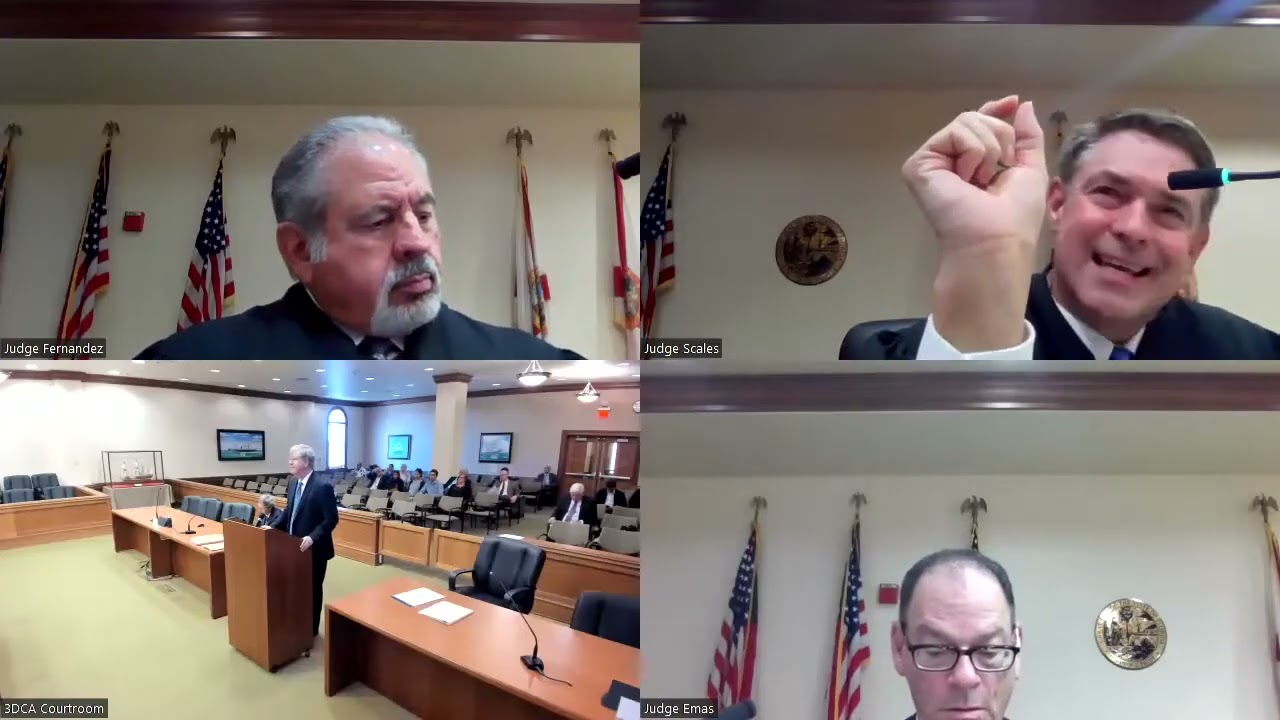
This is the recording of the actual oral argument, posted on the channel. What lawyers and judges say at argument is not the ruling; the decision is summarized above.
Personal Representative’s Own $2.5 Million Claims Against the Estate: Barred by § 733.710?
Go Deeper
- Florida Probate Has Hard Deadlines for Creditors — Miss the Deadline and Your Claim Is Gone
- Florida Personal Representative Duties: What the Job Requires and When a PR Is Personally Liable
- Florida Probate Deadlines and Creditor Claims: Every Clock That Matters, in One Place
Frequently Asked Questions
Can a personal representative pay himself back from the estate in Florida?
Only by following the rules for claims. A personal representative owed money by the decedent must present the claim and give the required notice. In Rich v. Narog, a personal representative who repaid himself about $1.37 million without filing a claim or giving notice was surcharged.
What is the two-year deadline under section 733.710?
Section 733.710 bars claims against a decedent’s estate two years after death if they were not timely presented, whether or not letters of administration were issued. Florida courts treat it as a jurisdictional statute of nonclaim that cannot be extended.
What is a surcharge against a personal representative?
It is an order making the personal representative personally repay the estate for losses caused by a breach of duty, such as paying claims that were barred. Here the trial court surcharged the personal representative about $2.54 million, and the Third District affirmed.
Is an affidavit enough to stop summary judgment in Florida?
Not if it is conclusory. Since May 1, 2021, Florida follows the federal standard, so the nonmoving party needs specific, significantly probative evidence. The court said Rich’s affidavit might have worked under the old rule but failed under the new one.
Talk to a Florida probate litigation lawyer
Weidner Law, P.A. handles Florida probate disputes and probate appeals from St. Petersburg. If you need a probate litigation lawyer, call (727) 954-8752 or email weidner@mattweidnerlaw.com.
Read the law yourself, free: the full Florida Probate Code and Probate Rules and the Florida Trust Code are on floridarules.net.
This article is general information about Florida law, not legal advice about your situation. Reading it, watching the videos, or contacting the firm does not create an attorney-client relationship. Every case turns on its own facts, and past results do not guarantee a similar outcome. The hiring of a lawyer is an important decision that should not be based solely upon advertisements.
