
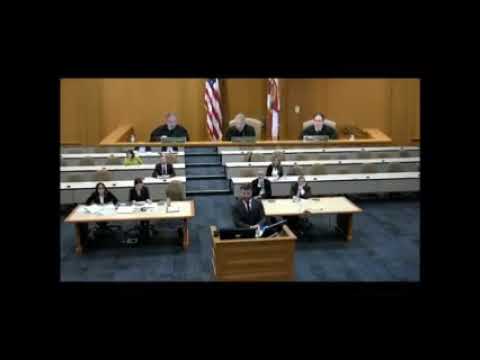
In short: In Pigna v. Cremieux, a Miami-Dade probate judge granted summary judgment declaring a trust amendment invalid because both attesting witnesses testified they did not see the settlor sign it. The appellant argued the supervising lawyer’s testimony and the witnesses’ signed self-proving affidavit created a fact issue for trial. After oral argument, the Third District dismissed the appeal without prejudice on April 9, 2018, for lack of jurisdiction, because a related undue influence count was still pending, so the court never reached the merits.
The Facts
The settlor had a revocable trust dated September 13, 2010. According to the argument, an amendment dated January 26, 2011 removed his three children as beneficiaries and left the trust’s only asset, a home, to his widow. The appellees told the court the amendment was signed in a car at night, on the way to an emergency room, with a supervising lawyer who also notarized it.
The children’s side challenged the amendment, first for undue influence and then for improper execution. The trial court granted summary judgment declaring the amendment invalid and the September 2010 trust the governing document. The undue influence count was not resolved. The points below are what the lawyers argued, not findings by the appellate court.
- The appellant, who defended the amendment, argued the supervising lawyer testified at deposition that she was certain the witnesses saw the settlor sign, which created a genuine issue of material fact for trial.
- The appellant also argued the witnesses’ signed self-proving affidavit contradicted their later testimony, and that the children’s mother lacked standing to bring the motion after the older children reached adulthood.
- The appellees argued that when both attesting witnesses testify they did not see the settlor sign, a non-attesting witness cannot fill the gap under the probate code, citing Jordan v. Fehr and Tomlinson, and that the affidavit was not a valid self-proof because no oath was administered.
- The panel opened with jurisdiction, asking how the order could be final while the undue influence count attacking the same document remained pending.
The Decision
On March 16, 2018, the Third District ordered both sides to show cause why the appeal should not be dismissed as taken from a non-final, non-appealable order. On April 9, 2018, after oral argument, the court dismissed the appeal without prejudice for lack of jurisdiction and denied the appellees’ motion for appellate attorney’s fees. Rehearing was denied on May 22, 2018.
Because the appeal was dismissed for lack of jurisdiction, the Third District did not decide whether the amendment was validly executed or whether the lawyer’s testimony could create a fact issue. We could not locate any later appeal in this case.
The Law
Under section 736.0403(2)(b), the testamentary aspects of a revocable trust signed by a Florida domiciliary are invalid unless the trust is executed with the formalities required for a will. Section 732.502 requires the testator to sign in the presence of two attesting witnesses, who must sign in the presence of the testator and each other.
A will or trust can be made self-proving under section 732.503 by the acknowledgment of the signer and the affidavits of the witnesses, made before an officer authorized to administer oaths. Section 733.201 governs proof of execution, and section 733.107 places the burden of proving formal execution on the proponent in a contest.
Appellate jurisdiction depends on finality. Under Florida Rule of Appellate Procedure 9.110 an appeal lies from a final order, and Rule 9.170 lists the probate orders that are appealable before the end of the case. An order resolving one theory against a document while another theory remains pending may not qualify.
Current law (2026): Florida’s summary judgment rule, Rule 1.510, adopted the federal standard effective May 1, 2021. This case was decided under the earlier standard.
Lessons
- Execute trust amendments with full will formalities, in a setting where both witnesses actually watch the signer sign. A rushed signing in a car is a lawsuit waiting to happen.
- A self-proving affidavit helps only if it is properly executed with an oath before a notary. Witnesses who later deny what the affidavit says invite a contest.
- Before appealing a partial ruling in a trust or probate case, confirm the order is final or appealable under Rule 9.170. Pending counts on the same document can end the appeal before the merits are heard.
- Dismissal for lack of jurisdiction is not a ruling on the merits. It leaves the question for another day.
Source: Pigna v. Cremieux, No. 3D17-0599 — Fla. 3d DCA docket (appeal dismissed without prejudice for lack of jurisdiction April 9, 2018; rehearing denied May 22, 2018).
Watch the Oral Argument
This is the recording of the actual oral argument, posted on the channel. What lawyers and judges say at argument is not the ruling; the decision is summarized above.
Trust Amendment the Witnesses Never Saw Signed: Can the Lawyer's Testimony Save It?
Go Deeper
- How to Contest a Trust in Florida: Deathbed Amendments, Undue Influence and More
- DIY and Online Wills and Trusts in Florida: Why So Many Fail, and What It Costs the Family
- How to Contest a Will in Florida: Who Can Sue, What You Must Prove, and the 3-Month Deadline
Frequently Asked Questions
Does a trust amendment need witnesses in Florida?
If the amendment changes who receives property at death, yes. Section 736.0403(2)(b) requires the testamentary aspects of a revocable trust to be executed with the same formalities as a will, which means two attesting witnesses under section 732.502.
What happens if the witnesses did not see the settlor sign?
The document can be declared invalid for improper execution. In Pigna v. Cremieux, the trial court invalidated a trust amendment on that ground, but the appellate court dismissed the appeal for lack of jurisdiction and did not decide whether that ruling was correct.
Can the lawyer who supervised the signing testify that it was done correctly?
That was the central dispute here. The appellant relied on the lawyer’s testimony, while the appellees argued that when both attesting witnesses deny seeing the signature, a non-attesting witness cannot supply proof. The Third District did not resolve the question.
What is a self-proving affidavit in Florida?
Under section 732.503, it is a sworn statement by the signer and the witnesses, made before a notary or other officer, confirming the document was properly signed. A valid self-proof lets the document be admitted without live witness testimony, but its validity can still be challenged.
Talk to a Florida trust litigation lawyer
Weidner Law, P.A. handles Florida trust disputes and probate appeals from St. Petersburg. If you need a trust litigation lawyer, call (727) 954-8752 or email weidner@mattweidnerlaw.com.
Read the law yourself, free: the full Florida Probate Code and Probate Rules and the Florida Trust Code are on floridarules.net.
This article is general information about Florida law, not legal advice about your situation. Reading it, watching the videos, or contacting the firm does not create an attorney-client relationship. Every case turns on its own facts, and past results do not guarantee a similar outcome. The hiring of a lawyer is an important decision that should not be based solely upon advertisements.
