
In short: In de Holguin v. Godin, a widow left out of her husband’s Florida will objected to the probate and asked the court to revoke the will. The probate court dismissed her for lack of standing, relying on an antenuptial agreement the estate attached to a reply. On April 26, 2023, the Third District reversed because the court looked outside her pleading, but it affirmed the denial of her injunction. On remand she lost on summary judgment, and the Third District affirmed in 2025 because her antenuptial agreement released all claims against the estate.
The Facts
Rodrigo Ernesto Holguin Lourido died in Colombia in December 2019. He left a Florida will covering his United States assets, and that will expressly left out his wife, Mary Ann James de Holguin. His daughter, Camila Holguin Godin, opened a probate administration in Miami-Dade County in 2020 and served as personal representative.
Mary Ann objected to the notice of administration and filed a counter-petition to revoke the will. The personal representative moved to dismiss for lack of standing. In a reply, the estate attached a 1999 antenuptial agreement in which Mary Ann released claims to her husband’s estate. The probate court dismissed her objection and counter-petition with prejudice. It also denied her motion for an injunction concerning a Key Biscayne property, the Casa del Mar home, where the locks had been changed.
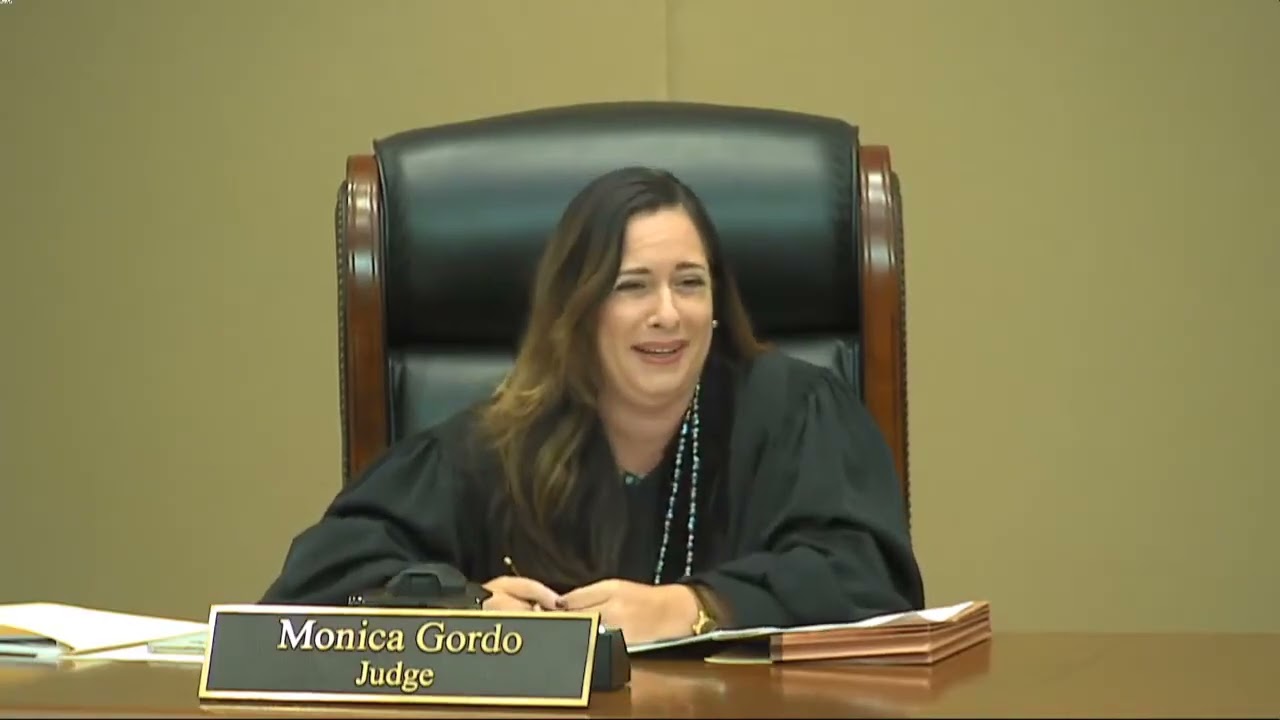
The appeal was argued on November 15, 2022. These are the positions the lawyers took at argument, not findings by the court.
- The widow argued she had standing three ways: as a 50% owner of a New York co-op listed in the estate inventory, as a creditor claiming about $3 million, and as an interested person, because Colombian law (which she said governed) does not let a spouse be disinherited.
- She argued the judge went beyond the four corners of her pleading by relying on the antenuptial agreement, which the estate first raised in its reply.
- She argued the Casa del Mar home was owned through layers of companies, so it was not an estate asset and the personal representative had no authority to lock her out.
- The estate argued she was at most a creditor who should pursue her contract rights under the antenuptial agreement and a 2019 memorandum of understanding, and that she had released any right to challenge the will.
The Decision
The Third District affirmed in part, reversed in part, and remanded on April 26, 2023, in a per curiam opinion. It held that the trial court erred in going beyond the four corners of the counter-petition and its attachments to decide that Mary Ann lacked standing. On a motion to dismiss for lack of standing, the court must accept the well-pled allegations as true. Mary Ann had alleged that she could benefit through intestate succession if the will were invalidated, and the court cited Herrilka v. Yates for the point that an heir at law, including a surviving spouse, is an interested person. It ordered her objections and counter-petition reinstated.
The court also noted that, on the record before it, nothing supported treating the Casa del Mar property as an estate asset. The inventory did not list it, and the property sat beneath several layers of corporate ownership with no finding that the corporate form should be disregarded. Even so, it affirmed the denial of the injunction, because irreparable harm and the lack of an adequate remedy at law are both required for injunctive relief. The court said it took no position on the validity of the will under Colombian law.
The win did not last. On remand, the decedent’s children moved for summary judgment. In de Holguin v. Lourido, No. 3D24-0014 (Fla. 3d DCA Sept. 17, 2025), the Third District affirmed a final summary judgment for the children. It held that Mary Ann lacked standing as a matter of law because, before the marriage, she signed an antenuptial agreement releasing all claims against the estate, an agreement authorized by section 732.702. Rehearing was denied October 21, 2025. A related appeal in her separate creditor action, decided August 9, 2023, partly affirmed a forum non conveniens dismissal in favor of Colombia.
The Law
Section 731.201 of the Florida Probate Code defines an interested person as any person who may reasonably be expected to be affected by the outcome of the particular proceeding involved. Only an interested person can object to a will or petition to revoke probate, so standing is often the first fight in a will contest.
A spouse can give up inheritance rights before or during marriage. Section 732.702 allows a written waiver of the elective share, intestate share, pretermitted share, homestead, exempt property, family allowance and preference in appointment as personal representative. A waiver signed before marriage requires no disclosure. The 2025 decision turned on exactly this kind of agreement.
Procedure matters too. On a motion to dismiss, a court looks only at the pleading and its attachments. A defense that depends on an outside document, like a prenup the other side never attached, generally has to wait for summary judgment. Summary judgment in Florida is governed by Florida Rule of Civil Procedure 1.510.
Current law (2026): Florida’s amended Rule 1.510, which adopted the federal summary judgment standard, took effect May 1, 2021. The 2025 appeal in this case applied that standard.
Lessons
- A surviving spouse who would inherit if the will fails is usually an interested person and can get through the courthouse door at the pleading stage.
- Getting through the door is not winning. A signed antenuptial or postnuptial waiver can end a spouse’s will contest on summary judgment.
- If you are defending a will contest with a prenup, expect the court to wait for summary judgment if the prenup is not in the challenger’s pleading.
- Property held through companies is generally not an estate asset unless a court disregards the corporate form, which affects who controls it during probate.
- Claims under a contract with the decedent are usually pursued as creditor claims or separate actions, not as a will contest.
Source: de Holguin v. Godin, 359 So. 3d 1254 (Fla. 3d DCA 2023), No. 3D21-898, opinion filed April 26, 2023; ACIS docket. Later history: de Holguin v. Lourido, 421 So. 3d 771 (Fla. 3d DCA 2025), No. 3D24-0014.
Watch the Oral Argument
This is the recording of the actual oral argument, posted on the channel. What lawyers and judges say at argument is not the ruling; the decision is summarized above.
Can a Widow Contest Her Husband's Will? Standing as Co-Owner, Creditor and Interested Person
Go Deeper
- Prenups, Divorce, and Inheritance in Florida: What a Spouse Can Waive and What Divorce Revokes
- Can You Disinherit a Spouse or Minor Child in Florida?
- When Florida Probate Becomes a Lawsuit: Adversary Proceedings, Family Conflict, and What It Costs
Frequently Asked Questions
Who has standing to contest a will in Florida?
An interested person, meaning someone who may reasonably be expected to be affected by the outcome of the proceeding. Heirs who would inherit if the will failed, and beneficiaries of an earlier will, usually qualify. In de Holguin v. Godin the Third District held a surviving spouse who alleged she would take by intestacy had pleaded enough to proceed.
Can a surviving spouse be disinherited in Florida?
Not completely, unless the spouse waived those rights. A Florida spouse generally has elective share and homestead rights a will cannot defeat. A spouse can waive them in a written agreement under section 732.702, which is what ended the widow’s challenge in the 2025 de Holguin decision.
Does a prenup stop a spouse from contesting a will?
It can. In de Holguin v. Lourido (2025), the Third District held the widow lacked standing as a matter of law because she signed an antenuptial agreement before marriage releasing all claims against her husband’s estate. The agreement must be valid; the widow there did not claim fraud, duress or unfairness.
Can a judge consider a prenup on a motion to dismiss a will challenge?
Usually not, if the prenup is not attached to or part of the challenger’s pleading. In the 2023 de Holguin opinion, the Third District reversed a dismissal because the trial court relied on an agreement the estate attached only to its reply. The same agreement later decided the case on summary judgment.
Talk to a Florida probate litigation lawyer
Weidner Law, P.A. handles Florida probate disputes and probate appeals from St. Petersburg. If you need a probate litigation lawyer, call (727) 954-8752 or email weidner@mattweidnerlaw.com.
Read the law yourself, free: the full Florida Probate Code and Probate Rules and the Florida Trust Code are on floridarules.net.
This article is general information about Florida law, not legal advice about your situation. Reading it, watching the videos, or contacting the firm does not create an attorney-client relationship. Every case turns on its own facts, and past results do not guarantee a similar outcome. The hiring of a lawyer is an important decision that should not be based solely upon advertisements.
