
In short: The Third DCA held an LLC manager was removed without the member vote the operating agreement required, and that the member could sue directly. But the business judgment rule still defeated its damages claims, so that judgment was affirmed. The court reversed a separate judgment voiding a transfer of an interest in a member entity.
The Facts
Med-Rite Laboratories, LLC was formed in 2010 to make and sell a medical device. Its members fell out over financing, the location of the manufacturing plant, and key personnel. A 2012 amended operating agreement defined a "Majority in Interest" as more than 60% of the members’ percentage interests or more than 60% of the managers, and allowed members holding a Majority in Interest to remove a manager.
In June 2012, a letter signed by some members and managers removed Larry Ferk from the board of managers. Separately, an owner of Mas-Rite, LLC (itself a Med-Rite member) transferred his majority stake in Mas-Rite to Ferk Family, LP without using the operating agreement’s notice, consent, and right-of-first-offer procedures. Other members sued Ferk Family claiming the transfer violated the agreement; Ferk Family counterclaimed over Larry Ferk’s removal and other management decisions. The trial court granted summary judgment voiding the transfer and, after a bench trial, ruled against Ferk Family on its claims.
The Decision
The Third District split its ruling. On the transfer, it reversed: the operating agreement restricted transfers of a member’s interest in Med-Rite, but the person who sold was not a Med-Rite member and sold his interest in Mas-Rite, not Mas-Rite’s interest in Med-Rite. Absent express language reaching upstream transfers, the restriction was never triggered, and the court directed judgment for Ferk Family on those counts.
On the removal, the court agreed with Ferk Family that the "Majority in Interest" needed to remove a manager meant more than 60% of members’ percentage interests, not 60% of managers; the signers held only about 54%, so the removal was not authorized. It also held Ferk Family could sue directly, without meeting the usual direct-versus-derivative test, because the operating agreement expressly preserved members’ rights to enforce it against each other. Even so, the court affirmed the judgment against Ferk Family because competent evidence supported the trial court’s finding that the defendants acted within the business judgment rule, which barred monetary liability.
The Law
The operating agreement is the first place to look on removal votes and transfer restrictions, and courts read it as written: a restriction on transferring "interests in the company" does not reach a sale of an ownership stake in a member entity unless it says so. On standing, Florida generally requires direct harm and a special injury for a member to sue in his own name (Dinuro Investments, LLC v. Camacho), but a separate contractual duty, such as an agreement clause letting members enforce the agreement against each other, is an exception. The Revised LLC Act addresses direct and derivative actions in section 605.0801 and following sections.
The court applied the business judgment protection of former section 608.4228. Florida’s old LLC Act (chapter 608) has been fully replaced by the Florida Revised Limited Liability Company Act; the equivalent protection now appears in section 605.04093, Florida Statutes, which shields managers and members from monetary liability for management decisions unless the breach falls into listed categories such as improper personal benefit, conscious disregard of the company’s interests, or willful misconduct.
Current law (2026): Former s. 608.4228 (business judgment/limitation of liability under the old LLC Act) no longer governs; chapter 608 was replaced by chapter 605 (Florida Revised LLC Act), fully applicable to all LLCs since Jan. 1, 2015. The comparable provision is s. 605.04093 (2026).
Lessons
- Read the voting definitions carefully. A removal done by the wrong group, or with the wrong percentage, is unauthorized even if most of the managers agree.
- Proving a breach is not the same as recovering money. The business judgment rule can still bar damages against managers who acted in good faith.
- If you want transfer restrictions to reach sales of interests in a member entity, the operating agreement must say so expressly.
- A clause preserving members’ rights to enforce the agreement against each other can open the door to direct suits.
Watch the Oral Argument
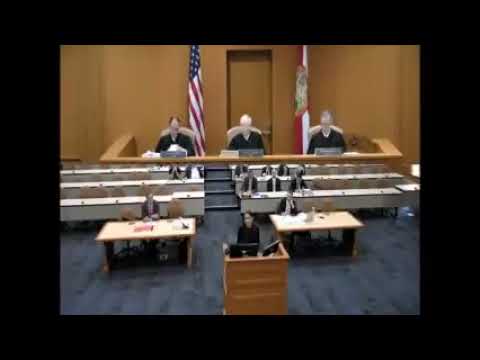
This is the recording of the actual oral argument, posted on the channel. What lawyers and judges say at argument is not the ruling; the decision is summarized above.
Removing an LLC Manager: Members' Vote or Managers' Vote? | Ferk Family v. Frank, 3D16-0448
Go Deeper
- A Developer, an Estate and a Family Trust Fight Over an LLC (Meehan v. Funk)
- Constructive Trusts in Family Business Fights: Why the Order Was Reversed (Abdo v. Abdo)
Frequently Asked Questions
How do you remove a manager from a Florida LLC?
Follow the operating agreement. In Ferk Family, the agreement allowed removal by members holding a ‘Majority in Interest,’ and the court read that to require more than 60% of members’ percentage interests. A removal signed by members holding about 54% was not authorized.
Can an LLC member sue another member directly in Florida?
Usually a member must show direct harm and a special injury separate from other members, or else sue derivatively. But if the operating agreement creates a separate contractual right, such as a clause preserving members’ rights to enforce the agreement against one another, a direct suit may proceed, as the court held in Ferk Family.
Does the business judgment rule apply to Florida LLC managers?
Yes. Today section 605.04093 limits managers’ and members’ personal monetary liability for management decisions unless the conduct fits listed exceptions, like improper personal benefit or willful misconduct. In Ferk Family, the rule barred damages even though the court found a manager’s removal was unauthorized.
Do LLC transfer restrictions cover selling an interest in a member company?
Not unless the agreement expressly says so. In Ferk Family, a restriction on transferring a member’s interest in the LLC did not apply when an owner of a member entity sold his stake in that entity, so the transfer could not be voided.
Talk to a Florida business litigation lawyer
Weidner Law, P.A. handles business, LLC, shareholder and contract disputes from St. Petersburg. If you need a civil litigation lawyer, call (727) 954-8752 or email weidner@mattweidnerlaw.com.
Read the law yourself, free: every Florida statute and court rule is on floridarules.net.
This article is general information about Florida law, not legal advice about your situation. Reading it, watching the videos, or contacting the firm does not create an attorney-client relationship. Every case turns on its own facts, and past results do not guarantee a similar outcome. The hiring of a lawyer is an important decision that should not be based solely upon advertisements.
