
In short: Yes, if the lease says so. In Mid-America v. Gonzalez (2025), the Second District held that an apartment lease arbitration clause expressly covering personal injury from use of common areas required arbitration of a tenant’s trip-and-fall claim. It reversed the order denying arbitration, and no extra significant relationship test was needed.
The Facts
A tenant rented an apartment in a Hillsborough County community managed by Mid-America Apartment Communities. While walking through a common area, she stepped on an in-ground utility box with a defective cover, fell, and was hurt. She sued the landlord and its property manager for premises liability in circuit court.
Her lease had an arbitration section. It said claims between tenant and landlord would go to binding arbitration, and it defined a covered claim broadly, expressly including tort and personal injury claims tied to the apartment, the property, and the tenant’s use of the apartment or common areas.
The landlord moved to compel arbitration. The trial court denied the motion, reasoning that the parties could not have had a slip-and-fall in mind when they signed a lease and that the injury claim rested on duties that exist apart from the lease. The landlord took an immediate (non-final) appeal, which Florida’s appellate rules allow for orders on arbitration.
The Decision
The Second District reversed. Reviewing the clause fresh (de novo), the court held that it unambiguously and expressly covers personal injury claims arising from the use of common areas. When a clause names the type of claim at issue, a court does not need to run the usual “significant relationship” or “contractual nexus” test used for general “arising out of or relating to” clauses. The court adopted the Fourth District’s reasoning in Lennar Homes, LLC v. Wilkinsky (2023), found this case indistinguishable, and said its approach is consistent with the Florida Supreme Court’s decision in Seifert v. U.S. Home Corp.
The court also rejected the tenant’s argument that tripping while walking is not a “use” of a common area: walking across a common area is using it. The case went back to the trial court with directions to grant the motion and send the claim to arbitration.
The Law
Florida’s Revised Arbitration Code lets a party with a written arbitration agreement ask the court to compel arbitration; if the other side opposes, the court decides the question summarily and orders arbitration unless there is no enforceable agreement (section 682.03). Courts ask three questions: is there a valid written agreement, is there an arbitrable issue, and was the right waived. Doubts about scope are resolved in favor of arbitration.
Scope turns on wording. Under Seifert, a tort claim is not automatically covered just because the parties had a contract; with a general clause, the claim must have a significant relationship to the contract. Mid-America adds that when the clause itself names the claim (here, personal injury from common-area use), that drafting choice controls.
Current law (2026): Chapter 682 (Revised Florida Arbitration Code) is unchanged in relevant part; s. 682.03 last amended 2013.
Lessons
- Tenants: read the arbitration section of a lease before signing. Many large-landlord leases now reach injury claims, not just rent and deposit disputes.
- Specific wording wins. A clause that expressly lists personal injury and common areas is likely to be enforced as written in the Second District.
- Landlords and managers: if you want injury claims arbitrated, say so expressly; a general “arising out of or relating to” clause invites a fight under Seifert.
- An order denying arbitration can be appealed right away, so the issue is usually decided before the case goes much further.
Source: Mid-America Apartment Communities, Inc. v. Gonzalez, No. 2D2024-0780 — Fla. 2d DCA (March 14, 2025).
Watch the Oral Argument
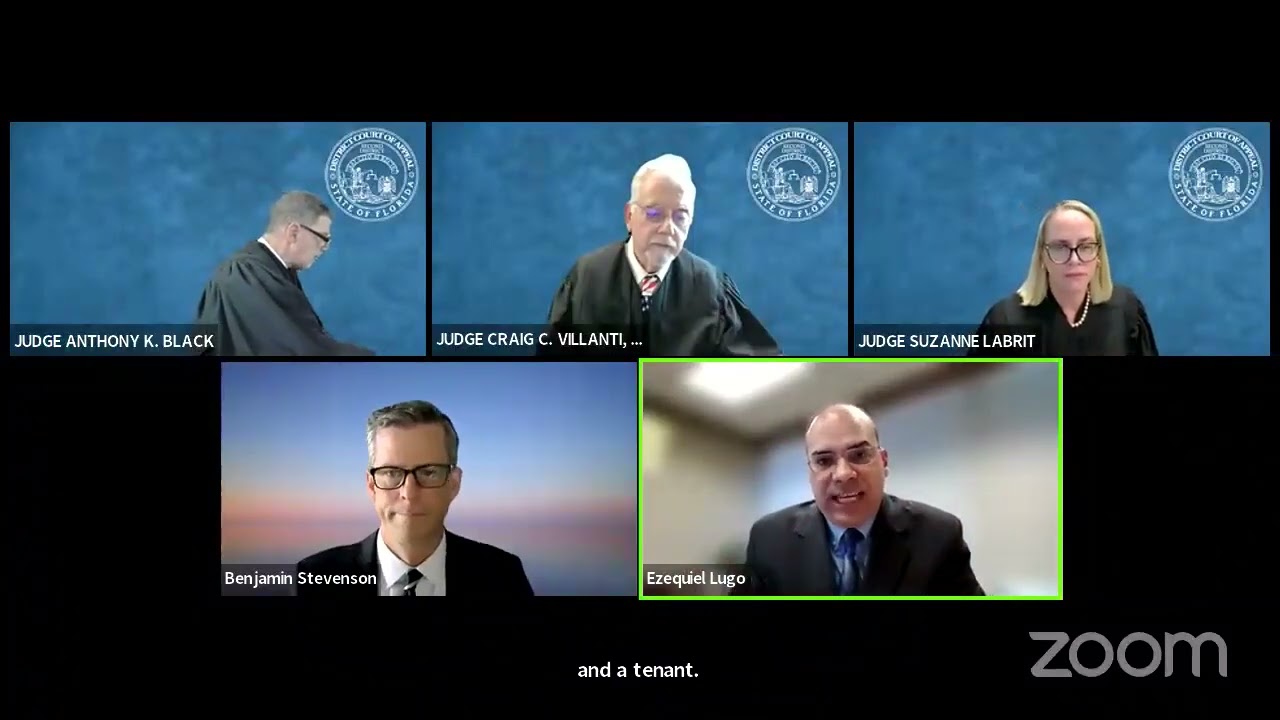
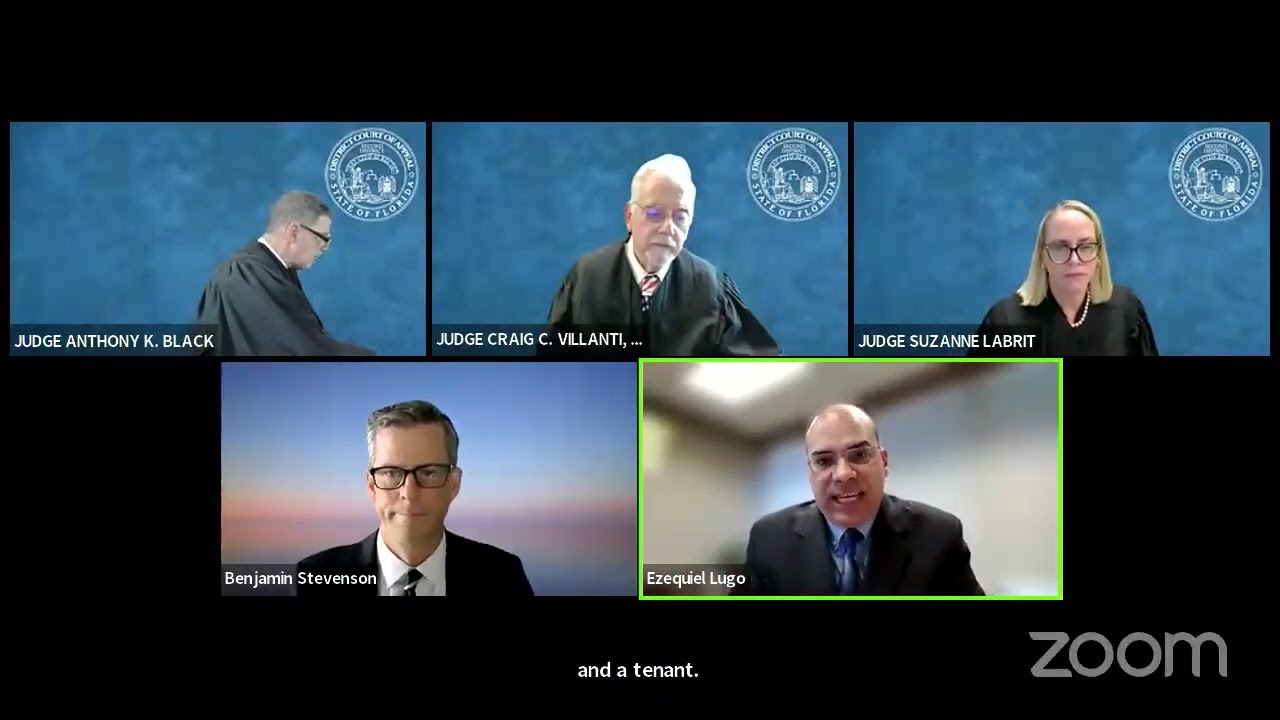
This is the recording of the actual oral argument, posted on the channel. What lawyers and judges say at argument is not the ruling; the decision is summarized above.
Tenant Injury Claim and the Lease Arbitration Clause | Mid-America v. Gonzalez, 2D24-0780
Go Deeper
- Five Days, Not Fifteen: The Eviction Rehearing Trap (Fisher v. Housing Authority of Key West)
- Commercial Lease Fights in Florida: Lockouts, Holdovers and One Word in the Lease
Frequently Asked Questions
Can my apartment lease force my injury claim into arbitration in Florida?
It can. In Mid-America v. Gonzalez (2025), the Second District enforced a lease clause that expressly covered personal injury claims from using common areas, sending a tenant’s trip-and-fall claim to arbitration. Whether your claim is covered depends on the exact words of your lease’s arbitration section, so the clause itself is the first thing to read.
What is the significant relationship test for arbitration in Florida?
It comes from Seifert v. U.S. Home Corp. When an arbitration clause uses general language such as arising out of or relating to the contract, a tort claim is covered only if it has a significant relationship to the contract. The Second District held that this test is not needed when the clause expressly names the type of claim, such as personal injury in common areas.
Can I appeal an order denying a motion to compel arbitration in Florida?
Yes. Florida’s appellate rules allow an immediate appeal of a non-final order deciding entitlement to arbitration. That is how the landlord in Mid-America v. Gonzalez got review before trial. The appellate court reviews the scope of an arbitration clause de novo, meaning without deference to the trial judge’s reading.
Does tripping in an apartment parking lot or walkway count as using a common area?
In Mid-America v. Gonzalez the Second District said yes: walking across a common area is a use of it. The tenant had argued a trip and fall was not a use, but the court rejected that reading, so the lease’s coverage of claims from use of common areas reached her fall.
Talk to a Florida landlord-tenant and lease lawyer
Weidner Law, P.A. handles residential and commercial lease disputes and evictions from St. Petersburg. If you need a real estate litigation lawyer, call (727) 954-8752 or email weidner@mattweidnerlaw.com.
Read the law yourself, free: every Florida statute and court rule is on floridarules.net.
This article is general information about Florida law, not legal advice about your situation. Reading it, watching the videos, or contacting the firm does not create an attorney-client relationship. Every case turns on its own facts, and past results do not guarantee a similar outcome. The hiring of a lawyer is an important decision that should not be based solely upon advertisements.
