
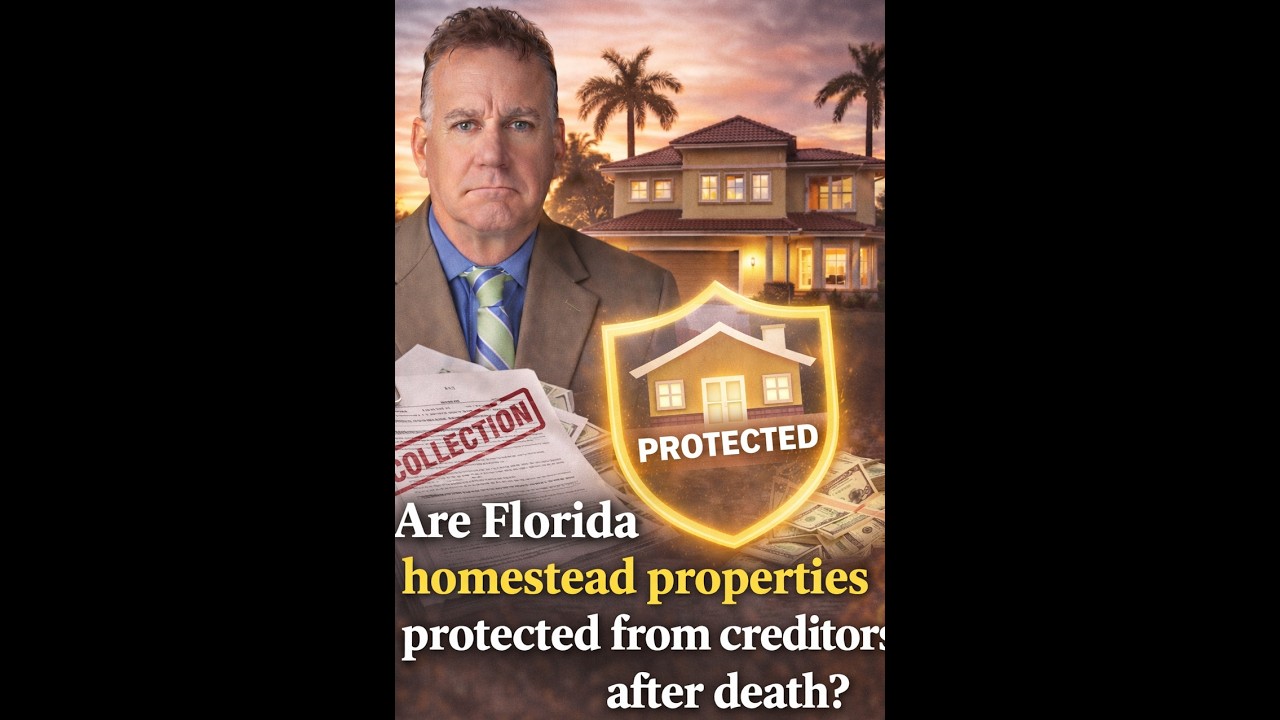
Florida homestead protection during life is well known — creditors generally cannot force the sale of your primary residence to satisfy a judgment. But what happens to that protection when you die? The answer is more complicated than most families expect, and the distinction between what survives death and what doesn’t has significant financial consequences.
Homestead Protection During Life vs. After Death
During your lifetime, Florida’s homestead exemption protects your primary residence from forced sale by most creditors. Exceptions exist for mortgages, taxes, and certain statutory liens — but general judgment creditors cannot reach your homestead. This is one of the strongest asset protection features in any state.
After you die, however, the analysis changes. The homestead protection from creditors survives death under Florida law — but only as long as the property passes to qualified heirs. Under Florida Statute § 732.401, if the homestead descends to a surviving spouse or heirs, it retains its creditor protection. But if the property passes outside of the protected homestead chain — including through certain trusts or to non-qualifying beneficiaries — the protection may be lost.
The Critical Distinction: Descent vs. Devise
Florida courts have drawn a careful line between homestead property that descends by operation of law (protected) and homestead property that is devised through a will or trust in a way that conflicts with § 732.401 (potentially unprotected or void). A devise of homestead to a non-spouse, non-minor-child beneficiary that violates the statute is not just invalid — it may expose the property to estate creditors who would otherwise have no claim.
This is one of the reasons why “I’ll just put the house in my will” is insufficient estate planning for Florida homeowners. The intersection of homestead rights, devise restrictions, and creditor protection requires careful legal analysis for every Florida estate with a primary residence.
Protecting Your Florida Home After You’re Gone
If you own Florida homestead property and have creditors — or if your estate may be insolvent — the way your home passes at death can determine whether your family keeps it or loses it to creditor claims. Proper estate planning addresses these risks before they arise. Contact Weidner Law for a review of your Florida estate plan.
Read the Exact Statute
The Florida statutes cited in this article are published word-for-word — free, complete, and fully organized — at FloridaRules.net.
FloridaRules.net — Every Florida Probate Rule, Statute, and Case Commentary. In One Place.
