
In short: If anyone at home might need to deal with your bank, insurer or utilities while you are away or out of reach, yes. Without a power of attorney, no one, not even your spouse, has legal authority to act on accounts in your name. In Florida, a power of attorney must be signed in front of two witnesses and a notary under section 709.2105, should say it survives incapacity, and gives your agent power that the law limits to acting in good faith and in your best interest.
Why a Trip Is the Time to Do It
Matt Weidner’s point in the video is practical. Summer travel season is when people book flights, and it is also when someone at home suddenly has to call the bank, the insurance company or the power company for a person who is abroad, in a hospital, or simply unreachable. He has seen power shut off and accounts frozen because the account holder was incapacitated or just incommunicado and no one else had authority to speak for them.
Being married does not solve this. A spouse is not automatically an agent for accounts, policies or contracts in the other spouse’s name alone. That is why Matt says husband and wife should each sign one, naming the other or another trusted person. He also stresses that a power of attorney is not just for elderly clients. It is for anyone who travels, works long hours away from home, or would leave a family stuck if they could not answer the phone.
The alternative, if you are incapacitated rather than just away, is usually a court guardianship. A properly signed durable power of attorney is one of the main ways to avoid that.
How to Sign a Valid Florida Power of Attorney
Florida’s Power of Attorney Act is part II of chapter 709. The signing rules are strict, and a document that misses them may be rejected.
Two witnesses and a notary. Under section 709.2105, the principal must sign in front of two subscribing witnesses and acknowledge the signature before a notary public. The agent must be an adult (18 or older) or a financial institution with trust powers that does business in Florida.
Durable language. A power of attorney that does not say otherwise ends if you become incapacitated. Under section 709.2104, it is durable only if it contains the words “This durable power of attorney is not terminated by subsequent incapacity of the principal” or similar words showing that intent. For a traveler, durability is the whole point: the document has to work if the trip ends in a hospital.
Effective now, not later. Under section 709.2108, a Florida power of attorney signed after October 1, 2011 is exercisable when it is signed. A document that says it becomes effective at a future date or on a future event is ineffective, with narrow exceptions such as certain military powers. So the agent can act as soon as you sign, which is one more reason to choose the agent carefully.
The “superpowers” need your initials. Some powers are so easy to abuse that Florida requires the principal to sign or initial next to each one. Under section 709.2202, these include creating or changing a trust, making gifts, creating or changing rights of survivorship, creating or changing a beneficiary designation, waiving survivor benefits under a retirement plan, and disclaiming property. An agent cannot exercise those powers without your separate initials, and a power of attorney witnessed remotely by a witness who was not physically present does not grant them at all.
Out-of-state and military documents. Under section 709.2106, a power of attorney signed in another state is valid in Florida if it complied with that state’s law, though the bank may ask for an opinion of counsel at your expense. A military power of attorney under federal law is also valid.
Will the Bank Accept It?
A power of attorney only helps if the bank or insurer honors it. Florida gives institutions some protection and some deadlines.
Under section 709.2119, a person asked to accept a power of attorney that appears properly signed may ask the agent for a sworn affidavit that the principal is alive and the power has not been revoked, an opinion of counsel on a legal question (with the reason in writing), and an English translation if needed. A person who accepts it in good faith may rely on it.
Under section 709.2120, a third person must accept or reject the power of attorney within a reasonable time. For a financial institution or broker-dealer handling a banking or investment transaction the document expressly authorizes, four days, excluding weekends and legal holidays, is presumed reasonable. The institution may not demand its own form for authority the document already grants. A rejection must generally be in writing, and a wrongful rejection can lead to a court order to accept it and liability for attorney’s fees.
Practical point: give the bank the document before you leave. Finding out that a branch wants an affidavit or has questions is better done from your kitchen than from an airport overseas.
What Your Agent Can’t Do
Matt’s warning in the video is the other half of the story: a power of attorney is “super effective” for routine problems, and it is also abused, often within families. Being named agent does not mean you can use the principal’s money in ways you see fit.
Under section 709.2114, an agent who accepts the appointment must act only within the authority granted, must act in good faith, may not act contrary to the principal’s reasonable expectations actually known to the agent, and may not act contrary to the principal’s best interest. The agent must keep a record of all receipts, disbursements and transactions. Unless the document says otherwise, the agent must also act loyally for the sole benefit of the principal and avoid conflicts of interest.
If family members have questions about where a parent’s money is going, the law gives them a way to ask formally. Under section 709.2116, the principal, a successor agent, a guardian, any interested person who shows a good-faith belief that court intervention is needed, and others may petition a court to construe the power of attorney and review the agent’s conduct. The court can remove the agent and must award reasonable attorney’s fees and costs in those proceedings. Suspected exploitation of a vulnerable adult can also be reported to the Florida Abuse Hotline at 1-800-962-2873, which is the hotline Matt refers to in the video.
When It Ends and How to Revoke It
Under section 709.2109, a power of attorney ends when the principal dies, when the principal revokes it, when its stated purpose is accomplished, or when a court adjudicates the principal incapacitated (unless the court allows the agent to keep certain powers). A non-durable power ends at incapacity. A spouse-agent’s authority ends when a divorce, annulment or legal separation is filed, unless the document says otherwise. Filing a petition to determine the principal’s incapacity can suspend the agent’s authority while the case is pending.
Under section 709.2110, you revoke a power of attorney with a later power of attorney or another signed writing that says so. Signing a new power of attorney does not by itself revoke an old one unless it says it does. If you revoke, tell the agent and any institution that has a copy.
Death ends the agent’s authority. After death, the personal representative of the estate, or the beneficiary designations on the accounts, take over.
Common Mistakes
- Assuming a spouse can handle accounts in your name alone. Without a power of attorney or joint ownership, the institution does not have to deal with them.
- Using a form that leaves out the durable language, so it fails exactly when you are in a hospital.
- Signing with one witness, or without a notary. Florida requires both witnesses and the acknowledgment.
- Initialing every superpower by reflex. Gifts, beneficiary changes and survivorship changes are where abuse happens; grant them only if you mean to.
- Never showing the document to the bank until there is an emergency.
Lessons
- If you are traveling and someone at home may need to act for you, sign a durable power of attorney before you go. Spouses should each have one.
- Follow Florida’s execution rules: two witnesses and a notary, with durable language.
- The agent’s power starts at signing, so pick someone you trust and consider a successor agent.
- The agent is a fiduciary. Every dollar must be spent for the principal’s benefit and recorded.
- Family members who suspect abuse can ask a court to review the agent’s conduct or call the Florida Abuse Hotline.
Source: Sections 709.2104, 709.2105, 709.2106, 709.2108, 709.2109, 709.2110, 709.2114, 709.2116, 709.2119, 709.2120 and 709.2202, Florida Statutes (2026); Florida Department of Children and Families, About the Florida Abuse Hotline.
Watch the Video
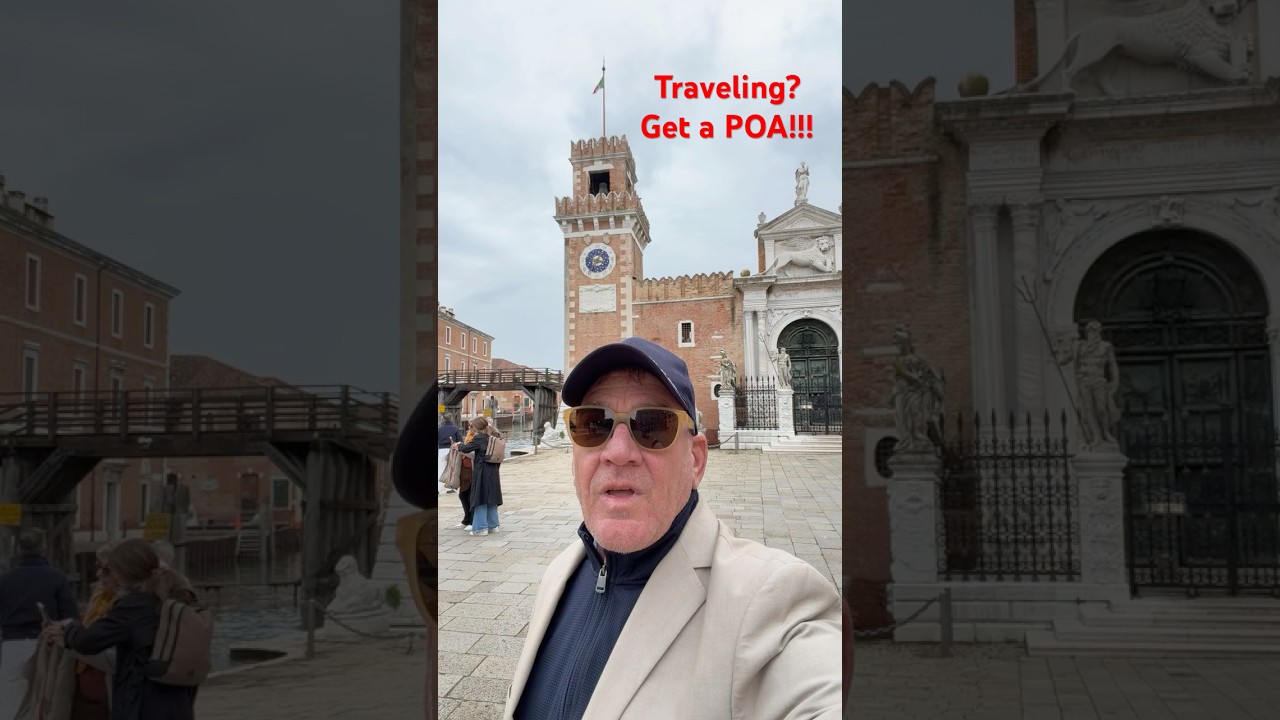
In this short video Matt Weidner explains why both spouses should sign a durable power of attorney before a trip, and why an agent cannot use the principal’s money as the agent sees fit. The statutes are linked above.
🚨 The #1 Travel Document You're Missing (DON'T Get This Wrong) ⚠️
Go Deeper
- How to Avoid Guardianship in Florida: The Power of Attorney Is the Least Restrictive Alternative
- When a Family Member Is Taking a Parent's Money in Florida: Power of Attorney, Guardianship, and Exploitation
- Power of Attorney Agent Put House Money in a POD Account (Warren v. Thomson)
Frequently Asked Questions
Can my wife sign for me while I'm out of the country?
Only if she has legal authority, such as a power of attorney you signed or joint ownership of the account. Marriage alone does not make a spouse your agent for accounts, policies or contracts in your name. A Florida durable power of attorney signed before the trip solves that.
What makes a power of attorney valid in Florida?
Under section 709.2105, the principal must sign it in front of two witnesses and acknowledge it before a notary, and the agent must be an adult or a qualified financial institution. To keep working if you become incapacitated, it must contain durable language under section 709.2104. Certain powers, like gifts and beneficiary changes, also need your separate initials under section 709.2202.
Can a bank refuse to accept my power of attorney?
Only for reasons the statute allows, such as a good-faith belief the document is invalid or the agent’s failure to provide a requested affidavit. Under section 709.2120, a bank handling a transaction the document expressly authorizes is presumed to have a reasonable time of four days, excluding weekends and holidays, to accept or reject it, and it cannot insist on its own form. A wrongful rejection can make it liable for attorney’s fees.
Can someone with power of attorney spend my parent's money however they want?
No. Under section 709.2114, the agent must act in good faith, within the authority granted, and in the principal’s best interest, and must keep records of every receipt and payment. Family members can petition a court under section 709.2116 to review the agent’s conduct, and suspected exploitation can be reported to the Florida Abuse Hotline at 1-800-962-2873.
Talk to a Florida probate litigation lawyer
Weidner Law, P.A. handles Florida probate disputes and probate appeals from St. Petersburg. If you need a probate litigation lawyer, call (727) 954-8752 or email weidner@mattweidnerlaw.com.
Read the law yourself, free: the full Florida Probate Code and Probate Rules and the Florida Trust Code are on floridarules.net.
This article is general information about Florida law, not legal advice about your situation. Reading it, watching the videos, or contacting the firm does not create an attorney-client relationship. Every case turns on its own facts, and past results do not guarantee a similar outcome. The hiring of a lawyer is an important decision that should not be based solely upon advertisements.
