
In short: In Rodriguez v. Rodriguez, a Miami-Dade probate court admitted a copy of a will whose original was never found, finding the presumption that the testator revoked it had been overcome. The decedent’s daughter appealed, arguing the only evidence was the self-serving testimony of the granddaughter who benefits under the will. The Third District affirmed without a written opinion on October 31, 2018.
The Facts
According to the argument, the decedent died on February 17, 2016, survived by two daughters. Years earlier she had signed a will that left her estate to one granddaughter, Eileen Rodriguez, and left out her daughters and other grandchildren. The original of that will was never found after her death. Eileen offered a copy, and the probate court admitted it.
One daughter, Lourdes C. Rodriguez, appealed (No. 3D18-423). The points below are what the lawyers argued, not findings by the court.
- The daughter argued no competent substantial evidence rebutted the presumption of revocation, because the only person who claimed to have seen the original after it left the drafting lawyer’s office was the granddaughter who benefits under it.
- She pointed to two relatives who testified they found only the decedent’s 1987 wills in the metal box where she kept her papers, and argued the court misread the medical evidence about the decedent’s dementia.
- The granddaughter argued the issue was credibility for the trial judge, that the daughter had her own financial motive tied to a $300,000 mortgage, and that circumstantial evidence can overcome the presumption, relying on Lonergan v. Estate of Budahazi.
- The panel asked whether any case holds that an interested proponent’s testimony is insufficient as a matter of law. Counsel said he had none.
The Decision
The Third District affirmed on October 31, 2018, in a per curiam affirmance without a written opinion (a PCA). The mandate issued November 16, 2018.
A PCA decides only this case. It means the probate court’s order admitting the copy stands, but it does not announce a rule about how much evidence it takes to overcome the presumption of revocation.
The Law
When an original will that was last in the testator’s possession cannot be found at death, Florida courts presume the testator destroyed it with the intent to revoke it. The presumption can be rebutted by competent substantial evidence, including circumstantial evidence. Revocation by physical act is governed by section 732.506: burning, tearing, canceling, defacing, obliterating or destroying the will with the intent to revoke it.
Section 733.207 lets any interested person establish the full and precise terms of a lost or destroyed will. The content must be proved by two disinterested witnesses, or by one disinterested witness if a correct copy is provided.
On appeal, findings of fact are reviewed for competent substantial evidence. The appellate court does not reweigh evidence or second-guess the trial judge’s credibility calls, which is why this argument turned on whether the case was really a credibility dispute.
Lessons
- Keep the original will where it can be found: with the drafting lawyer, in a safe place the family knows about, or deposited with the clerk.
- If the original is missing, expect a fight over the presumption of revocation and over section 733.207’s disinterested witness requirement.
- Credibility findings are hard to overturn. An appeal that asks the court to disbelieve a witness the trial judge believed usually fails.
- A PCA settles the case but does not create precedent. Do not cite it as a ruling on lost wills.
Source: Rodriguez v. Rodriguez, No. 3D18-0423 — Fla. 3d DCA docket (per curiam affirmed October 31, 2018).
Watch the Oral Argument
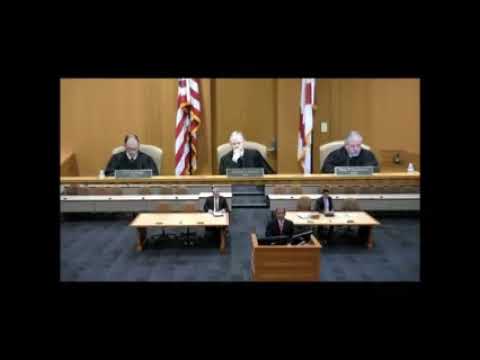
This is the recording of the actual oral argument, posted on the channel. What lawyers and judges say at argument is not the ruling; the decision is summarized above.
Lost Original Will: Can the Proponent's Own Testimony Overcome the Presumption of Revocation?
Go Deeper
- A Photocopied Will, No Disinterested Witness: Lost Will Rejected on Appeal (Pilak v. Reigel)
- Testamentary Capacity in Florida: When Dementia Makes a Will, Deed, or POA Invalid
- How to Contest a Will in Florida: Who Can Sue, What You Must Prove, and the 3-Month Deadline
Frequently Asked Questions
Can a copy of a will be probated in Florida?
Yes, in some cases. Section 733.207 allows an interested person to establish a lost or destroyed will, but the content must be proved by two disinterested witnesses, or one disinterested witness plus a correct copy. The proponent must also overcome the presumption that a missing original was revoked.
What is the presumption of revocation for a lost will?
If the testator had the original and it cannot be found at death, Florida presumes the testator destroyed it intending to revoke it. The proponent can rebut that presumption with competent substantial evidence, including circumstantial evidence.
Can the person who benefits from a lost will testify about it?
Yes, but the court weighs that testimony with the witness’s interest in mind. In Rodriguez v. Rodriguez, the daughter argued the granddaughter’s testimony was self-serving, but the trial court admitted the copy and the Third District affirmed without an opinion.
Can an appeals court overturn a judge's decision to believe a witness?
Rarely. Appellate courts review whether competent substantial evidence supports the findings and defer to the trial judge on credibility. That deference is the main reason appeals of fact-based probate rulings often end in a PCA.
Talk to a Florida probate litigation lawyer
Weidner Law, P.A. handles Florida probate disputes and probate appeals from St. Petersburg. If you need a probate litigation lawyer, call (727) 954-8752 or email weidner@mattweidnerlaw.com.
Read the law yourself, free: the full Florida Probate Code and Probate Rules and the Florida Trust Code are on floridarules.net.
This article is general information about Florida law, not legal advice about your situation. Reading it, watching the videos, or contacting the firm does not create an attorney-client relationship. Every case turns on its own facts, and past results do not guarantee a similar outcome. The hiring of a lawyer is an important decision that should not be based solely upon advertisements.
