
In short: In Fuentes v. Wachovia Mortgage, a wife living in Venezuela argued that the power of attorney she gave her husband allowed him to sell and convey their Aventura condo but not to mortgage it, so the refinance mortgage he signed for both of them could not be foreclosed against her. The trial court entered a final judgment of foreclosure. The Third District affirmed without a written opinion on July 31, 2013, and awarded the lender its appellate attorney’s fees.
The Facts
Susana Fuentes and her husband, Enrique Fuentes, owned a condominium unit in Aventura, Florida, as husband and wife. She lived in Venezuela. Using a power of attorney from her, the husband signed a refinance mortgage with World Savings Bank, later Wachovia Mortgage, that paid off an earlier mortgage she had signed. The husband later died. The lender foreclosed, and the trial court entered a final judgment of foreclosure.
She appealed, and the case was argued in July 2013. According to the lawyers, the power of attorney gave the husband power to “grant, bargain, sell and convey” the unit and to sign closing documents to carry out the sale and conveyance. It did not use the word mortgage. These are the arguments, not findings by the court.
- The wife argued that a power to sell and convey is not a power to borrow money and pledge the property, that the bank never introduced the power of attorney at trial, that Venezuelan law should govern her husband’s share, and that the bank’s remedy was a claim against the husband’s estate.
- The bank argued that a mortgage is a type of conveyance under Florida law, that an earlier plenary power of attorney signed before the Venezuelan consulate in Paris was never revoked, and that a letter from the wife authorized her husband to take a mortgage with World Savings on the unit.
- The bank also argued she accepted the benefits, including release of the prior mortgage she had signed, ratified the loan by continuing to make payments, and that the unit passed to her by survivorship as tenancy by the entireties property, so foreign estate law did not apply.
- The panel noted that the refinance paid off a mortgage she had signed and that her answer admitted she executed the power of attorney.
The Decision
The Third District affirmed on July 31, 2013. The docket lists the disposition as “Per Curiam Affirmed,” with no written opinion. On August 13, 2013, the court granted the lender’s motion for appellate attorney’s fees and sent the amount back to the trial court.
Because there is no opinion, the affirmance does not say whether the court agreed that a power to convey includes a power to mortgage, or whether it rested on ratification, the letter, the earlier power of attorney, or something else. It decides this case only.
The Law
Florida treats a mortgage as a lien, not a transfer of title, but section 697.01 says any instrument conveying or selling property as security for a debt is deemed a mortgage. The bank leaned on that language to argue a mortgage is a kind of conveyance.
Powers of attorney are read according to their terms. Section 709.2201 of the Florida Power of Attorney Act says an agent may exercise only the authority specifically granted in the document, plus authority reasonably necessary to carry out that grant.
Even when an agent exceeds his authority, the principal can ratify the transaction by accepting its benefits or acting consistently with it, such as making payments. Courts can also impose an equitable lien to the extent new loan money paid off an existing valid mortgage. The bank cited Palm Beach Savings & Loan Ass’n v. Fishbein, 619 So. 2d 267 (Fla. 1993), on that point.
Current law (2026): Part II of chapter 709, the Florida Power of Attorney Act, took effect October 1, 2011. Section 709.2105 requires a power of attorney executed on or after that date to be signed by the principal and two witnesses and acknowledged before a notary. Earlier documents are judged under the law in effect when they were signed.
Lessons
- If a power of attorney should allow borrowing or mortgaging, say so expressly. If it should not, say that too.
- Lenders relying on a power of attorney should confirm the document covers a mortgage, not just a sale.
- A principal who accepts the benefits of a loan, or keeps paying it, may lose the argument that the agent lacked authority.
- Property held by spouses as tenants by the entireties passes to the survivor on death, which can keep it out of the deceased spouse’s estate.
Source: Fuentes v. Wachovia Mortgage, F.S.B., No. 3D12-3009, Fla. 3d DCA docket (per curiam affirmed July 31, 2013), appeal from Miami-Dade Circuit Court No. 09-89508.
Watch the Oral Argument
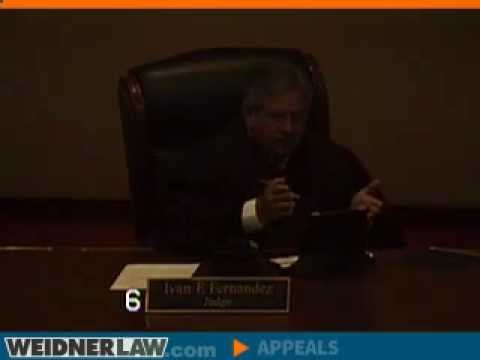
This is the recording of the actual oral argument, posted on the channel. What lawyers and judges say at argument is not the ruling; the decision is summarized above.
🔏 Does a Power of Attorney to "Convey" Include a Mortgage? | Fuentes v. Wachovia, 3D12-3009
Go Deeper
- Can a Bank Foreclose on Parents' Homestead They Never Mortgaged? (Wells Fargo v. Clavero)
- No Will, No Power of Attorney? What Happens to Florida Families Without an Estate Plan
- Served With a Foreclosure Lawsuit in Florida? The 20-Day Answer, the Lis Pendens, and Missed Dates
Frequently Asked Questions
Can someone with power of attorney mortgage my house in Florida?
Only if the power of attorney grants that authority. Under section 709.2201, an agent may exercise only the authority specifically granted, plus what is reasonably necessary to carry it out. In Fuentes v. Wachovia, the wife argued a power to sell and convey did not include a mortgage, but the foreclosure was affirmed without an opinion.
Is a mortgage a conveyance under Florida law?
Florida is a lien state, so a mortgage does not transfer title. But section 697.01 treats any instrument conveying property as security for a debt as a mortgage. Whether a power to convey includes a power to mortgage depends on the document’s wording and the circumstances.
Can I get out of a mortgage my agent signed without authority?
Possibly, but ratification is a common obstacle. If you accepted the loan’s benefits, such as the payoff of a prior mortgage, or kept making payments, a court may find you ratified it. The lender in Fuentes argued both.
What happens to a tenancy by the entireties property when one spouse dies?
The surviving spouse owns the whole property automatically by right of survivorship. It does not pass through the deceased spouse’s estate. In Fuentes, the bank argued this meant Venezuelan estate law did not control the Florida condo.
Talk to a Florida real estate litigation lawyer
Weidner Law, P.A. handles Florida real estate disputes, title problems and appeals from St. Petersburg. If you need a real estate litigation lawyer, call (727) 954-8752 or email weidner@mattweidnerlaw.com.
Read the law yourself, free: every Florida statute and court rule is on floridarules.net.
This article is general information about Florida law, not legal advice about your situation. Reading it, watching the videos, or contacting the firm does not create an attorney-client relationship. Every case turns on its own facts, and past results do not guarantee a similar outcome. The hiring of a lawyer is an important decision that should not be based solely upon advertisements.
