

In short: A commercial tenant, American Infoage, appealed a Hillsborough County judgment in its lease dispute with its landlord, GF Lake. The Second DCA affirmed in a one-word per curiam decision with no written opinion, so the judgment stands and the case sets no precedent. The reasoning was never explained.
The Facts
This was a commercial lease dispute between a tenant, American Infoage, LLC, and its landlord, GF Lake, LLC, filed in Hillsborough County circuit court in 2019. The tenant lost in the trial court and appealed to the Second District.
Because the appellate court affirmed without an opinion, there are no court-written facts. The video description of the oral argument indicates the dispute turned on the lease terms and that the lease had a prevailing-party fee clause. Beyond that, the specific claims and defenses are not described in the public decision.
The Decision
The Second District affirmed in a per curiam decision consisting of the single word “Affirmed.” A per curiam affirmance without opinion (a PCA) means the panel found no reversible error but chose not to explain why. A PCA cannot be cited as precedent and generally cannot be reviewed by the Florida Supreme Court.
The Law
Commercial leases in Florida are governed mostly by their own terms and general contract law, with Part I of chapter 83 covering nonresidential tenancies. Most commercial leases include a prevailing-party attorney’s fee clause, which Florida courts enforce, and section 57.105(7) makes a one-sided contractual fee clause reciprocal.
Appellate fees are requested by motion under Florida Rule of Appellate Procedure 9.400, and section 59.46 provides that a contract or statute allowing fees to the prevailing party includes fees on appeal unless it says otherwise.
Lessons
- Read the fee clause before you sue or appeal. In a commercial lease, the loser often pays both sides’ lawyers, including on appeal.
- A PCA ends the case without reasons. Budget for the real chance of an unexplained affirmance.
- Under section 59.46, a lease fee clause generally reaches appellate fees too.
- Commercial tenants have fewer statutory protections than residential tenants; the lease language usually controls.
Source: American Infoage, LLC v. GF Lake, LLC, No. 2D2023-1342 — Fla. 2d DCA (May 3, 2024).
Watch the Oral Argument
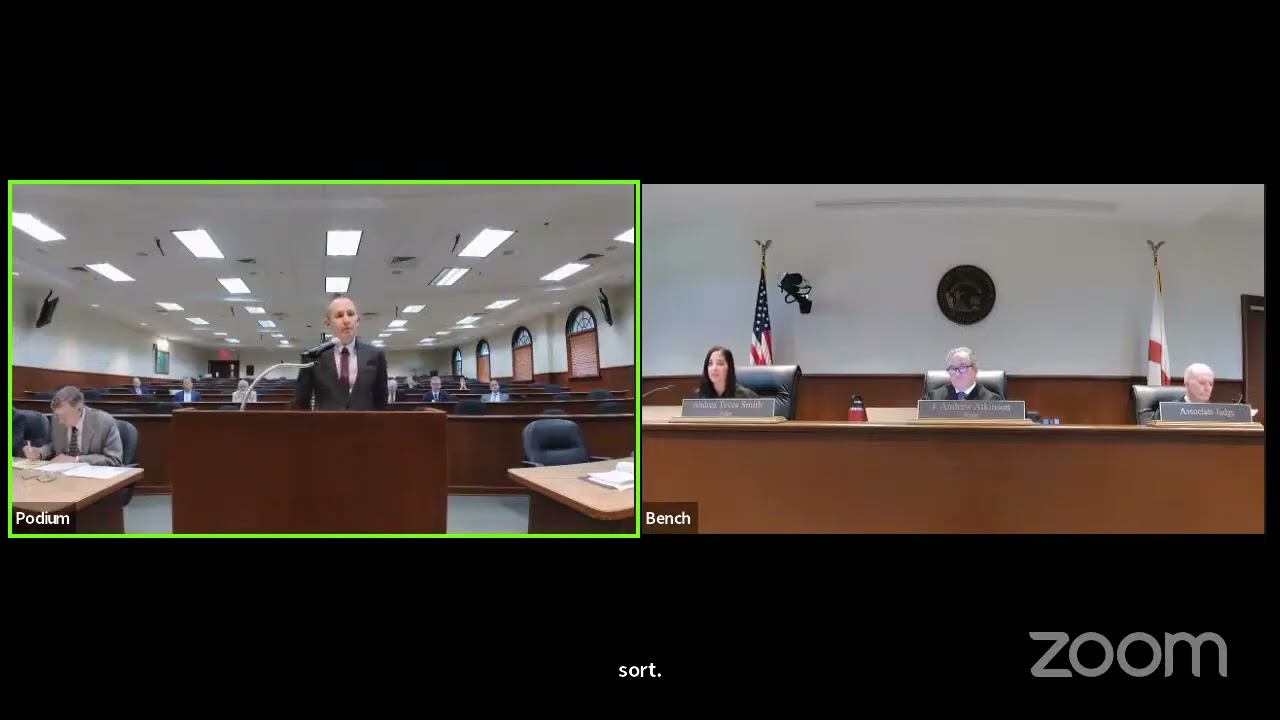
This is the recording of the actual oral argument, posted on the channel. What lawyers and judges say at argument is not the ruling; the decision is summarized above.
Commercial Lease Dispute | American Infoage v. GF Lake, 2D23-1342
Go Deeper
- Commercial Lease Fights in Florida: Lockouts, Holdovers and One Word in the Lease
- Tenant Left Early, Landlord Held Out for Higher Rent: Mitigation Under § 83.595 (Lieber v. Miller)
Frequently Asked Questions
What does a PCA mean in a Florida appeal?
PCA stands for per curiam affirmance, usually a one-word Affirmed with no opinion. It means the appellate panel found no reversible error but did not explain why. A PCA is not precedent, cannot be cited as authority, and generally cannot be taken to the Florida Supreme Court.
Does a commercial lease fee clause cover appeals in Florida?
Usually yes. Section 59.46 says that when a contract or statute provides for prevailing-party attorney’s fees, that includes fees on appeal unless the contract expressly says otherwise. The party seeking appellate fees still must file a timely motion in the appellate court under Rule 9.400.
Are commercial tenants protected by Florida's landlord-tenant act?
Only partly. The Residential Landlord and Tenant Act in Part II of chapter 83 does not apply to commercial space. Commercial tenancies fall under Part I of chapter 83 and, mostly, the lease itself. That makes the written lease terms far more important for a business tenant.
Can I appeal a PCA to the Florida Supreme Court?
Generally no. The Florida Supreme Court’s discretionary jurisdiction depends on a written opinion that expressly addresses a legal question. A one-word affirmance gives it nothing to review. A party can move for rehearing or a written opinion in the district court, but those are rarely granted.
Talk to a Florida landlord-tenant and lease lawyer
Weidner Law, P.A. handles residential and commercial lease disputes and evictions from St. Petersburg. If you need a real estate litigation lawyer, call (727) 954-8752 or email weidner@mattweidnerlaw.com.
Read the law yourself, free: every Florida statute and court rule is on floridarules.net.
This article is general information about Florida law, not legal advice about your situation. Reading it, watching the videos, or contacting the firm does not create an attorney-client relationship. Every case turns on its own facts, and past results do not guarantee a similar outcome. The hiring of a lawyer is an important decision that should not be based solely upon advertisements.
