

In short: Effective June 15, 2026, the Florida Supreme Court amended Rule 2.515 so that anyone signing a court filing represents that every cited legal authority exists and is accurately cited. The Court also barred local courts from imposing their own AI disclosure requirements. Fake citations can bring sanctions. Florida’s proposed AI Bill of Rights died in the House in March 2026.
AI-generated filings with fake case citations have produced sanctions in courts nationwide. Florida’s response in 2026 was a single statewide rule.
The New Certification
In case SC2026-0673, the Florida Supreme Court amended Rule of General Practice and Judicial Administration 2.515(d)(2), effective June 15, 2026. By signing a filing, the signer now represents that the legal authorities identified exist and are accurately cited. Courts may impose sanctions for filings inconsistent with that representation, including reprimand, contempt, striking the document, dismissal, costs, and attorney’s fees.
Local AI Orders Are Gone
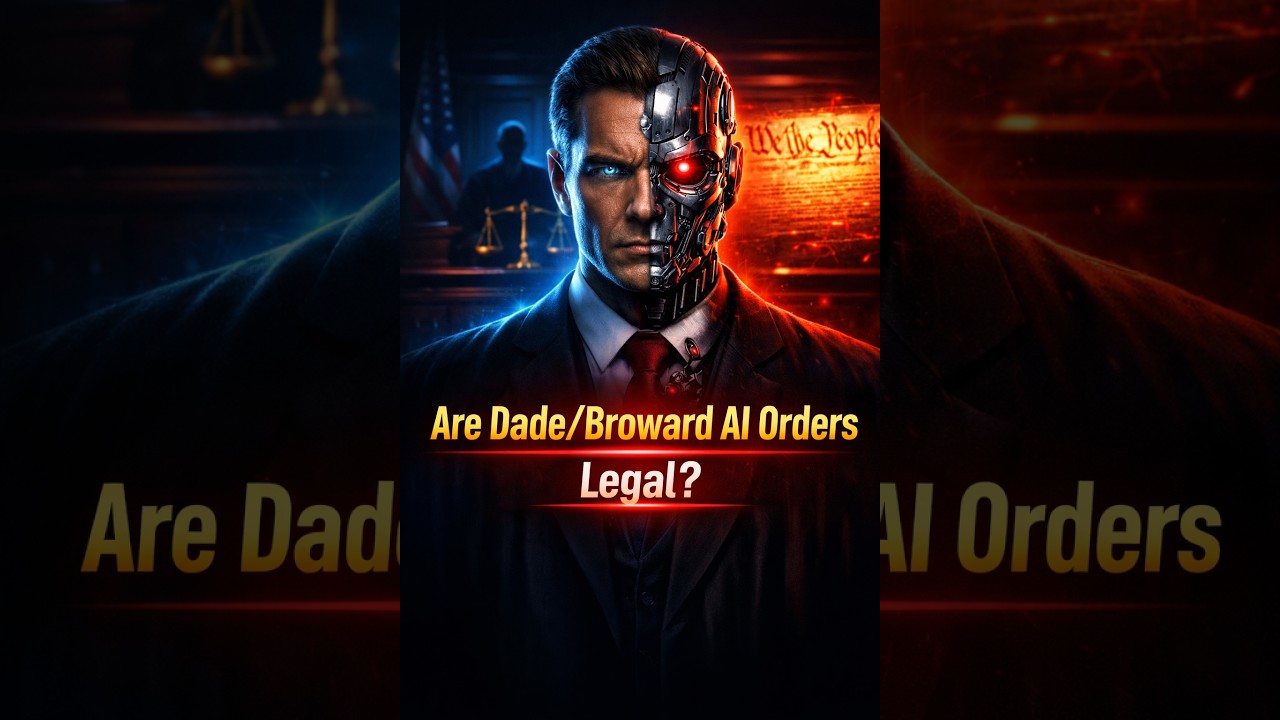
Earlier in 2026, the Eleventh (Miami-Dade) and Seventeenth (Broward) Circuits required parties to disclose and certify AI use in filings, and the videos below questioned whether those orders were proper. The Supreme Court’s administrative order now bars local courts from imposing their own AI requirements through administrative orders, policies, or practices. The obligation is the same statewide: verify every citation.
What the Bar Says
Florida Bar Ethics Opinion 24-1 (January 2024) allows lawyers to use generative AI, subject to existing duties: protect client confidences, supervise the output, don’t bill clients for time the tool saved, and follow advertising rules.
This Firm’s Own Experience
In 2024, The Florida Bar reported that an AI-generated court filing had misappropriated Matt Weidner’s name and Florida Bar number in a case he had no involvement in. That is part of why verification matters to every lawyer, not just the one using the tool.
What Clients Should Know
- AI can help organize facts and documents; it can’t replace a lawyer’s judgment or verification.
- If you represent yourself, the certification applies to you when you sign.
- Ask your lawyer how they use AI and how they check it.
The AI Bill of Rights
Governor DeSantis backed an "Artificial Intelligence Bill of Rights" (SB 482). It passed the Senate 35-2 on March 4, 2026, but died in the House on March 13, 2026. Government use of AI in decisions about property, taxes, and services remains largely unregulated by state statute.
Watch: the videos behind this article
Lawyers Using Artificial Intelligence – Are Chief Judge Orders Constitutional?
AI & the Florida Bar: New Guardrails, Court Orders & What Lawyers Must Do
Artificial Intelligence Has Hijacked Florida Courts
More Short Videos on This Issue


Frequently Asked Questions
Does Florida require disclosure of AI use in court filings?
No statewide disclosure is required. Since June 15, 2026, the signer of any filing represents that cited authorities exist and are accurately cited, and local courts may not impose separate AI requirements.
Can a lawyer be sanctioned for fake AI citations in Florida?
Yes. Courts may reprimand, hold in contempt, strike filings, dismiss, or award costs and fees.
Can Florida lawyers use AI?
Yes. Florida Bar Ethics Opinion 24-1 permits it, subject to confidentiality, supervision, fee, and advertising duties.
Did Florida pass an AI Bill of Rights?
No. SB 482 passed the Senate in March 2026 but died in the House.
Talk to a Florida litigation lawyer
Weidner Law, P.A. handles Florida civil litigation and appeals from St. Petersburg. To have your case reviewed, call (727) 954-8752 or email weidner@mattweidnerlaw.com.
Read the law yourself, free: the Florida Rules of Civil Procedure, Appellate Procedure, and Judicial Administration are all on floridarules.net.
This article is general information about Florida law, not legal advice about your situation. Reading it, watching the videos, or contacting the firm does not create an attorney-client relationship. Every case turns on its own facts, and past results do not guarantee a similar outcome. The hiring of a lawyer is an important decision that should not be based solely upon advertisements.
