
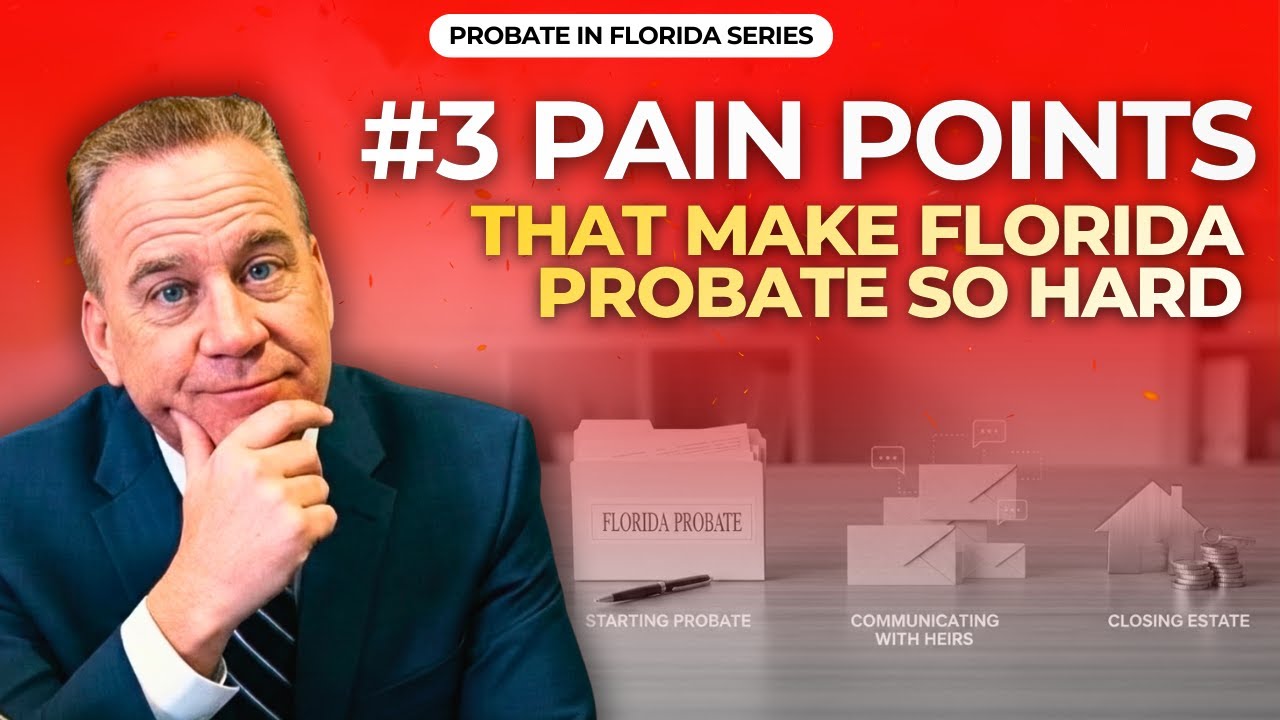
Florida probate doesn’t fail because families don’t care. It fails because the system hits people at the worst possible moment of their lives. Grief. Confusion. Deadlines. Family tension. After 26+ years of handling Florida probate cases, attorney Matthew Weidner sees the same three pain points destroy cases again and again.
Why Florida Probate Feels Overwhelming — And Why That’s Not an Accident
The Florida probate system was built around legal requirements and strict deadlines — not around the emotional reality of grieving families. When someone dies, their loved ones are thrust into a complex legal system at the exact moment they are least equipped to handle it. Understanding why probate is so hard is the first step to navigating it successfully.
Pain Point #1: Getting Started Feels Impossible
One of the first obstacles families hit is simply knowing where to begin. The paralysis of grief, combined with the overwhelming volume of required documents, causes dangerous delays right at the outset. Under Florida law, the original will must be filed with the probate court within 10 days of the decedent’s death — and most families don’t even know this rule exists.
Documents families commonly struggle to locate include:
- The original signed will
- Certified death certificates (you’ll need multiple copies)
- Financial account statements and beneficiary designations
- Real estate deeds and mortgage documents
- Life insurance policies
- Vehicle titles and other asset documents
“Every day of delay in the early stages of probate creates compounding problems — missed deadlines, creditor claims that go unaddressed, and family conflict that could have been prevented with clear guidance.”
— Matthew Weidner, Florida Probate Attorney
Pain Point #2: Communication Between Heirs Breaks Down
Even in close-knit families, probate creates conditions for conflict. When information isn’t shared openly and promptly among all heirs and beneficiaries, misunderstandings escalate. Beneficiaries who feel excluded become suspicious. Executors who feel overwhelmed stop communicating altogether. The result is expensive, avoidable litigation that costs everyone — in money, time, and family relationships.
The most common communication failures in Florida probate include:
- Personal representatives who fail to keep beneficiaries updated
- Sibling factions forming around competing interpretations of the will
- Heirs receiving financial information from third parties before the estate attorney shares it
- Delayed distributions that breed resentment and suspicion
Pain Point #3: Closing the Estate Without Tearing the Family Apart
The final distribution of assets is often the most emotionally charged phase of the entire probate process. Old grievances resurface. Perceived inequities become flashpoints. Items with sentimental value — not financial value — become the subject of bitter disputes. Without experienced professional guidance to facilitate this phase, families that entered probate intact often exit it permanently fractured.
How the Right Legal Guidance Changes Everything
Attorney Weidner’s approach to Florida probate is built around solving these three pain points directly. With proper legal support, Florida families can navigate probate in a way that is manageable, respectful, and efficient — even when the circumstances are difficult, the family is large, and the estate is complex.
The Weidner Law Firm combines technical legal expertise with the emotional intelligence that probate demands. We know what it takes to move a Florida estate from opening to closing — efficiently, correctly, and with the minimum possible damage to family relationships.
📌 Related Florida Probate Resources:
Frequently Asked Questions About Florida Probate
How long does Florida probate take?
Simple, uncontested Florida probate cases can close in 6 to 12 months. Complex estates with creditor disputes, will contests, or uncooperative heirs can take two to three years or longer. The three pain points described above — especially communication breakdown and family conflict — are the biggest drivers of extended timelines.
Can I handle Florida probate without an attorney?
Technically, Florida law requires an attorney for formal probate administration in most circumstances. Practically speaking, the complexity of Florida probate — the deadlines, the rules, the creditor claim process, and the potential for litigation — makes professional legal guidance essential for protecting everyone’s interests.
What happens if probate is never opened in Florida?
Assets that require probate but never go through the court process can become permanently inaccessible. Real estate cannot be transferred. Financial accounts cannot be distributed. And family members have no legal mechanism to resolve disputes over the estate. This is why prompt action is critical.
How do I start the probate process in Florida?
The first step is contacting a qualified Florida probate attorney as soon as possible after the death. The attorney will file the original will with the probate court, petition for appointment of a personal representative, and guide the estate through every required step of the process.
Ready to Start Your Florida Probate Case?
Attorney Matthew Weidner has 26+ years of Florida probate experience. We’re here to guide your family through every step.
Key Rules Referenced in This Article
The exact text of Florida law cited in this article is published word-for-word — free, complete, and fully organized — at FloridaRules.net. Direct links:
FloridaRules.net — Every Florida Probate Rule, Statute, and Case Commentary. In One Place.
